

Many adults in the U.S. work hard to improve their health. They follow a meal plan. They try to move more. They stay consistent with diet and exercise. Yet the scale barely moves.
When this happens, most people assume they need more discipline. Fewer calories. More workouts. Less rest. But in many cases, that mindset misses the real issue.
Stress blocks weight loss more often than people realize – especially after 30.
Here’s what I noticed while researching this topic: people often treat stress as an emotional problem, not a physical one. But stress doesn’t stay in the mind. It affects hormones, appetite, sleep, and how the body stores fat.
Over time, this can quietly slow progress or even lead to weight gain, even when someone is genuinely trying to lose weight.
Why Stress Matters More After 30
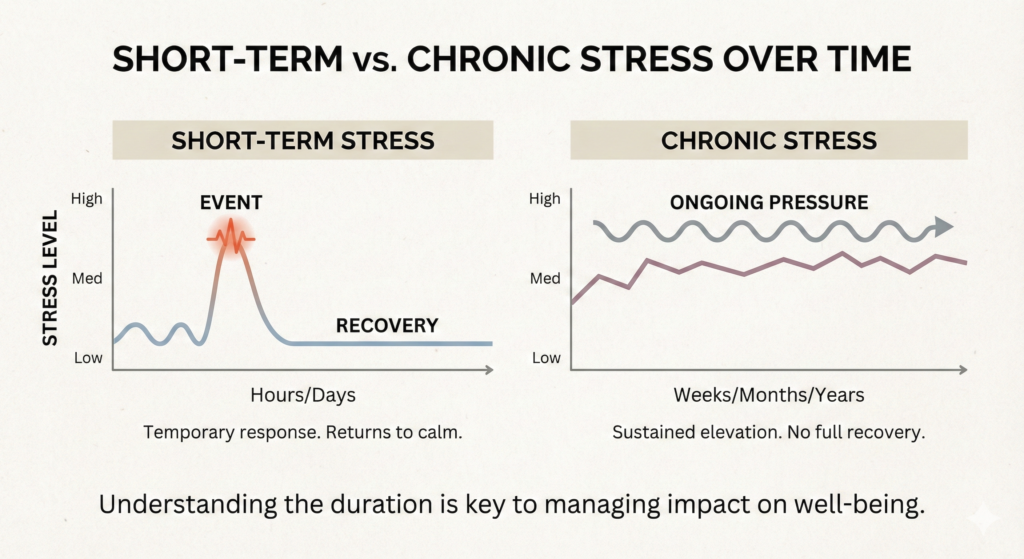
As adults get older, the body responds differently to pressure.
Short bursts of stress are normal. But ongoing pressure from work, finances, family, or lack of sleep creates chronic stress. When that happens, the body stays in a constant alert state.
This alert state changes how the body handles energy and food. Instead of focusing on fat burning, the body shifts toward protection and storage.
That’s one reason people can follow the same routine they used in their 20s and still see slower weight loss in their 30s and 40s.
Stress Is Not Just “In Your Head”
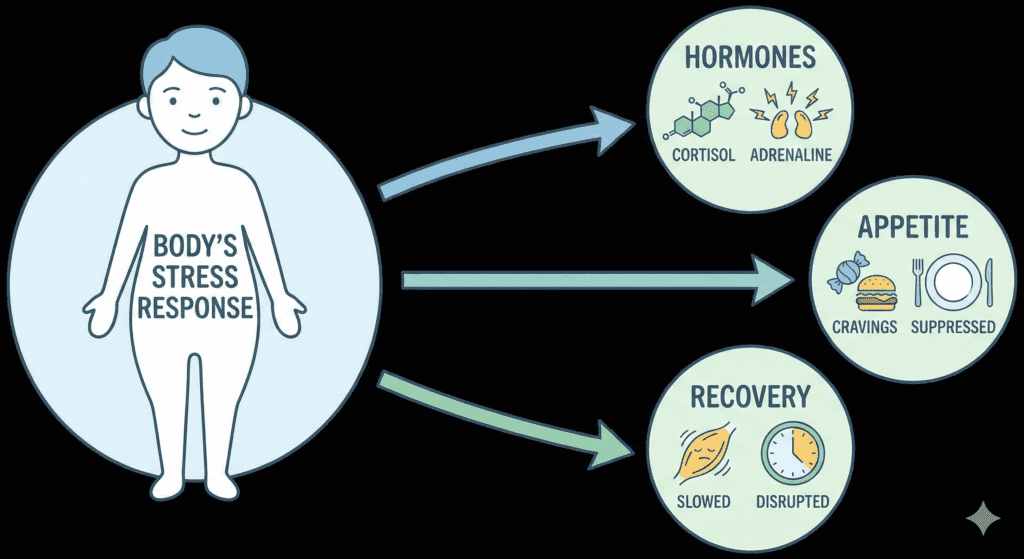
Stress triggers a physical reaction.
When the body senses a stressor, it prepares for action. The stress response kicks in. Hormones rise. Appetite can change. Cravings may increase. Recovery slows down.
This reaction made sense thousands of years ago. But today, stress often lasts all day. Emails. Deadlines. Commutes. Screens. Poor sleep.
When this response stays active, it can interfere with weight management in ways that aren’t obvious at first.
How Stress Influences Eating Habits

Stress often changes food behavior without people noticing.
Some people overeat. Others start skipping meals. Many reach for unhealthy foods because they feel quick comfort. This isn’t a lack of control – it’s biology reacting to pressure.
Stress can also affect food choices, pushing people toward high-calorie options even when they know better.
Over time, these patterns can lead to weight gain, especially around the middle.
Stress and the Body’s Storage Mode
One of the most important effects of stress is how it changes fat storage.
When stress stays high, the body becomes more likely to store energy rather than use it. This survival response makes sense short-term, but long-term it can block progress.
This is why stress often shows up as stubborn fat and stalled results, even with good intentions.
A Quick Reality Check
If your progress has slowed, it doesn’t mean your plan failed.
It often means stress is interfering with your body’s ability to respond the way it used to. Understanding this is the first step toward making adjustments that actually work.
In the next section, we’ll look at the biological and lifestyle reasons stress has such a strong effect on weight – without products, hype, or shortcuts.
Why Stress Interferes With Weight Loss After 30
To understand why stress blocks weight loss, it helps to look at what happens inside the body during stress. This isn’t about mindset alone. Stress creates real physical changes that affect how the body handles food, energy, and fat.
After 30, these effects become stronger and harder to ignore.
The Body’s Stress Response and Hormones
When the body senses a stressor, it activates a survival response. The body releases a hormone called cortisol, often known as the main stress hormone.
Cortisol helps the body respond to danger. It raises energy availability and prepares the body to act. In short bursts, this is helpful.
The problem starts when chronic stress keeps cortisol active for long periods. High cortisol levels tell the body to protect itself, not burn fuel. This directly affects weight loss and can lead to fat storage instead.
How Cortisol Affects Fat and Weight
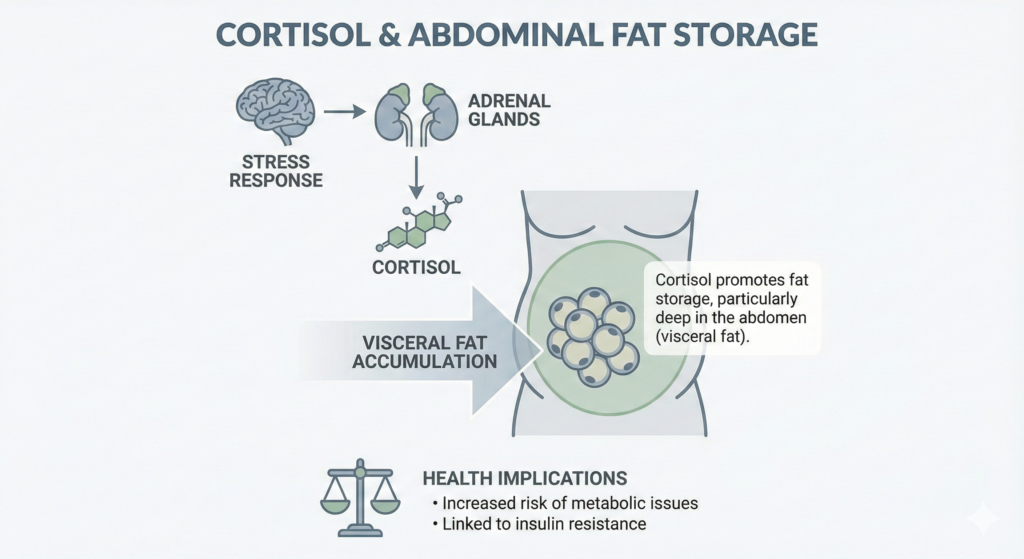
Cortisol has a strong effect on where fat is stored.
When cortisol levels stay elevated, the body becomes more likely to store fat, especially in the belly fat area. This storage response increases the risk of weight gain even when eating habits haven’t changed much.
This is one of the clearest examples of how stress affects body composition. It’s not about eating too much. It’s about the body staying in protection mode.
Over time, this can reduce the ability to lose weight and make progress feel stalled.
Stress, Blood Sugar, and Insulin
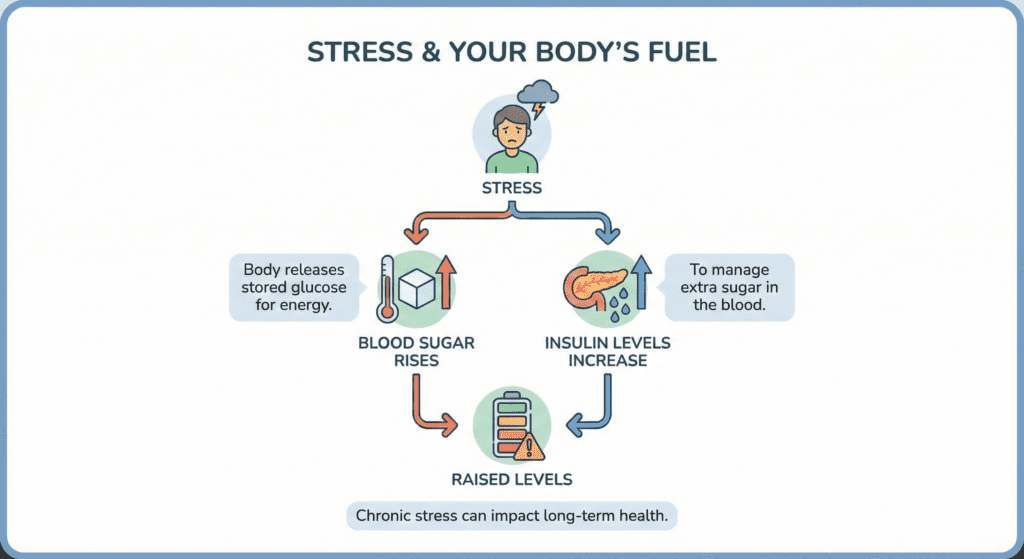
Stress also affects blood sugar.
Cortisol raises blood sugar to provide quick energy. When this happens repeatedly, insulin must work harder to bring levels back down. Over time, this can interfere with normal insulin response and increase the chance of fat storage.
This process links stress to type 2 diabetes risk and long-term weight issues. It’s one reason stress-related weight changes are considered part of comprehensive weight management discussions.
Stress and Eating Behavior
Stress doesn’t just change hormones. It also changes behavior.
When people feel stressed, they may:
- Overeat without realizing it
- End up eating comfort foods
- Choose unhealthy foods more often
- Eat quickly without awareness
This pattern is known as emotional eating, and it’s associated with stress, not lack of discipline.
In some cases, people also start skipping meals, which can worsen blood sugar swings and later cravings.
Why Stress Makes Weight Loss Harder Over Time
When stress continues day after day, it can lead to weight gain through multiple paths at once:
- Higher cortisol
- Poor food choices
- Disrupted blood sugar
- Lower recovery and sleep quality
This is why stress can cause plateaus or slow progress even when diet and exercise look “right.”
It’s also why stress may lead people to believe they’re failing, when the real issue is internal resistance.
Stress Is a Weight Factor, Not a Side Issue
Many people treat stress as optional to address. In reality, it’s central.
Stress impacts your body in ways that directly affect weight management. Ignoring it can sabotage your weight loss efforts, no matter how carefully meals are planned.
Understanding this connection is essential for anyone focused on effective weight management, especially after 30.
How Stress Interferes With Weight Loss Mechanisms
This section explains specific biological pathways through which stress interferes with fat loss. Each block focuses on one mechanism only, followed by a neutral reference to a related support option.
1) Stress, Cortisol, and Fat Storage
When a person experiences stress, the body releases a hormone called cortisol. This hormone is part of the normal stress response, but problems arise when stress is ongoing.
With chronic stress, cortisol stays elevated longer than it should. High cortisol levels signal the body to conserve energy, which can increase fat storage, especially around the belly. This process makes it harder to lose fat even when eating carefully.
This is one reason stress blocks weight loss despite consistent diet and exercise habits.
Some people explore Nagano Tonic because it is positioned around stress and cortisol balance. It is not a treatment or guarantee, but rather discussed as stress support.
Readers usually learn more through a separate internal review.
2) Stress and Cellular Energy Shutdown
Stress doesn’t only affect hormones -it also impacts cellular energy.
When the body is under constant pressure, it prioritizes survival over efficiency. Cells become less effective at producing energy, which lowers overall metabolic output. This reduces the body’s ability to burn calories throughout the day.
As a result, weight loss efforts may stall even when calorie intake is controlled.
Mitolyn is often discussed in this context because it focuses on cellular energy and mitochondrial function. It is positioned as support for energy production rather than a weight-loss product.
This is typically where an internal review fits naturally.
3) Stress, Blood Sugar, and Insulin Response
Stress affects blood sugar regulation.
Under stress, the body releases glucose into the bloodstream to prepare for action. If this happens frequently, insulin levels rise more often than needed. Over time, this pattern can contribute to insulin resistance.
When insulin stays elevated, the body is more likely to store fat instead of burning it, which can lead to weight gain and block fat loss.
Ikaria Lean Belly Juice is commonly mentioned in discussions around blood sugar and insulin balance. It is framed as metabolic support, not a solution.
Readers who want details usually continue to a full internal review.
4) Stress and Reduced Morning Thermogenesis
Stress often disrupts morning routines.
When mornings begin in a rushed or anxious state, the body may not fully activate thermogenesis -the process that helps the body burn calories early in the day. This lowers daily energy expenditure and can slow weight loss.
Over time, this pattern can make progress feel inconsistent even with effort.
Java Burn is often discussed in relation to morning thermogenesis. It is positioned around supporting early-day metabolic activation, not forcing results.
Readers typically explore more through an internal review if this area applies to them.
5) Stress, Protein Intake, and Muscle Loss
Stress can disrupt eating patterns.
Some people overeat, while others skip meals. Both patterns can reduce protein intake, which increases the risk of muscle loss. Since muscle supports metabolism, losing it can slow weight loss further.
This creates a cycle where stress lowers muscle mass, reduces calorie burn, and makes fat loss harder.
Programs like The Smoothie Diet are often discussed because they emphasize protein intake in a structured way. The focus is muscle preservation, not restriction.
This is another point where an internal review fits naturally.
6) Stress, Sleep Disruption, and Hormonal Recovery
Stress often affects sleep quality.
Poor sleep disrupts hunger hormones and raises cortisol the next day. This combination increases appetite and reduces fat burning, making it harder to maintain a calorie deficit.
Without proper recovery, the body remains in a stress-dominant state that blocks weight loss.
SleepLean is usually mentioned for its focus on sleep quality and nighttime hormonal recovery. It is positioned around rest support, not fat loss.
Readers often explore details through a dedicated internal review.
Key Takeaways, Final Verdict, and FAQs
At this point, one thing should be clear: when progress feels stuck, it’s often not because of food alone.
For many adults over 30, stress blocks weight loss in ways that are easy to miss. The body doesn’t separate mental pressure from physical response. When stress stays high, the body adapts in ways that can slow fat loss and increase the risk of weight gain.
This doesn’t mean stress is the only factor. But it is often the missing one.
What This Means for Real Life
Stress affects the body quietly but consistently.
When stress levels stay elevated:
- Hunger signals change
- Blood sugar control becomes less stable
- Recovery from exercise slows
- Fat storage becomes more likely
Over time, this can interfere with weight management, even when someone is following a solid routine.
This is why people can be consistent with diet and exercise and still feel like their weight loss efforts aren’t paying off.
The body isn’t broken. It’s responding to pressure.
Why Managing Stress Matters for Weight Loss
Stress doesn’t stop weight loss by itself.
It works by making it harder for the body to do what it normally does well.
High or prolonged stress can:
- Increase cortisol
- Encourage overeating or skipping meals
- Push the body toward fat storage
- Reduce the ability to lose weight steadily
This is especially common during long workdays, poor sleep, emotional strain, or periods where people feel overwhelmed.
Ignoring stress doesn’t make it go away. Addressing it gently often leads to better long-term results.
Final Verdict

So, does stress really block weight loss?
Yes – often more than people expect.
Stress blocks weight loss by changing hormones, habits, and recovery patterns that the body relies on to release fat. When stress stays unmanaged, it can sabotage your weight loss efforts, even if your plan looks good on paper.
The most effective approach isn’t extreme dieting or more punishment in the gym. It’s learning to support the body instead of constantly pushing it.
That’s what leads to effective weight management over time.
Frequently Asked Questions (FAQs)
Can stress really cause weight gain?
Yes. Ongoing stress can raise cortisol and affect eating behavior, which may lead to weight gain over time.
Why do I eat more when I’m stressed?
Stress can increase appetite and cravings. Many people find themselves eating more comfort foods when pressure is high. This is a biological response, not a lack of willpower.
Does stress affect belly fat specifically?
Stress is often linked to fat stored around the middle, sometimes referred to as belly fat, because cortisol influences where fat is stored.
Can reducing stress help with weight loss?
For many people, yes. Better stress management can support appetite control, recovery, and consistency, which all help weight loss efforts.
Is exercise enough to manage stress?
Exercise can help, but it’s not the only tool. Sleep, boundaries, mindfulness, and daily routines all play a role in how the body responds to stress.
When should someone seek extra help?
If stress feels overwhelming or constant, seeking support – whether medical, mental health, or lifestyle-based – can be an important step in a comprehensive weight management approach.
One Last Thought
If you’re doing “everything right” and still struggling, stress may be the piece you haven’t addressed yet.
Not because you failed -but because life is demanding.
Small, repeatable steps to manage stress often do more for long-term results than pushing harder ever will.