

A lot of adults over 30 notice something confusing. They eat fewer calories, try to clean up their diet, and still struggle with weight loss. In some cases, they even see weight gain despite doing “everything right.”
Here’s the part most people don’t realize at first: muscle loss slows metabolism.
This doesn’t happen overnight. It happens quietly. And when it does, the body starts using less energy at rest. That means the same meals that once worked for weight loss may now maintain body weight-or slowly push it up.
Most people in the US blame age, hormones, or genetics. But in many cases, the bigger issue is a gradual loss of muscle tissue that changes how metabolism works.
How Muscle Loss Changes the Way Metabolism Works
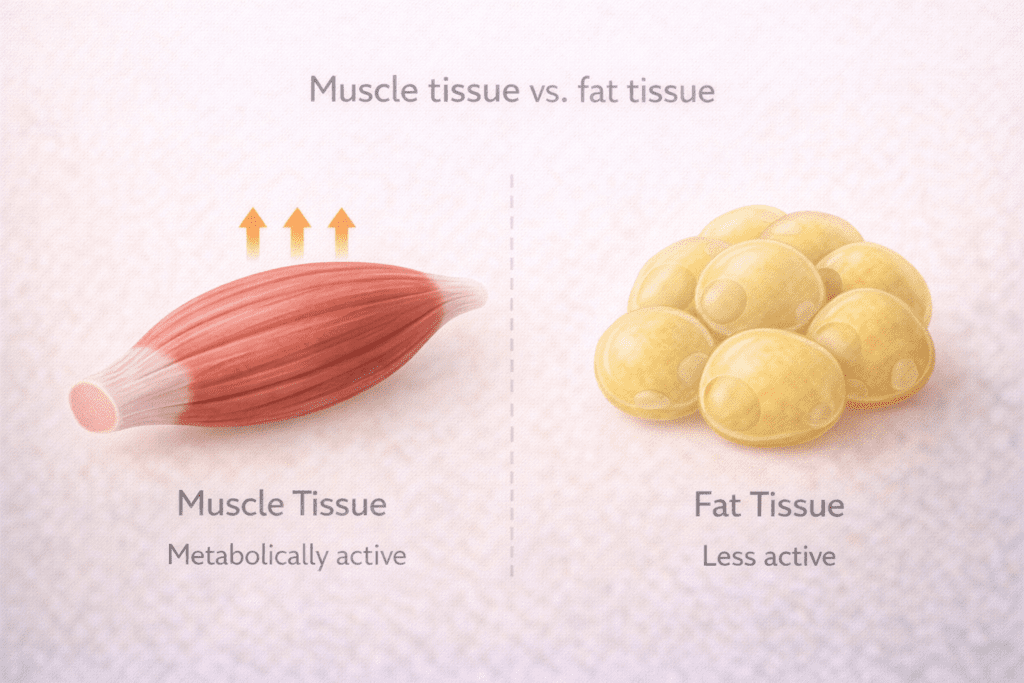
Metabolism isn’t just about how active you are. It’s about how much energy your body needs to function every day. Muscle mass plays a major role here.
Muscle tissue is metabolically active. It requires more calories per day than fat, even when you’re not moving. When muscle mass declines, energy needs drop. That’s one reason muscle loss can lead to a slow metabolism over time.
After 30, several things can accelerate this process:
- Sitting more and moving less
- Skipping strength training
- Going on a diet too often
- Eating too few calories for long periods
When muscle loss happens, metabolic rate may decrease. The body adapts by burning fewer calories to protect itself. This is not a failure-it’s survival.
But it does make weight loss harder.
Dieting, Calorie Cuts, and the Muscle Problem
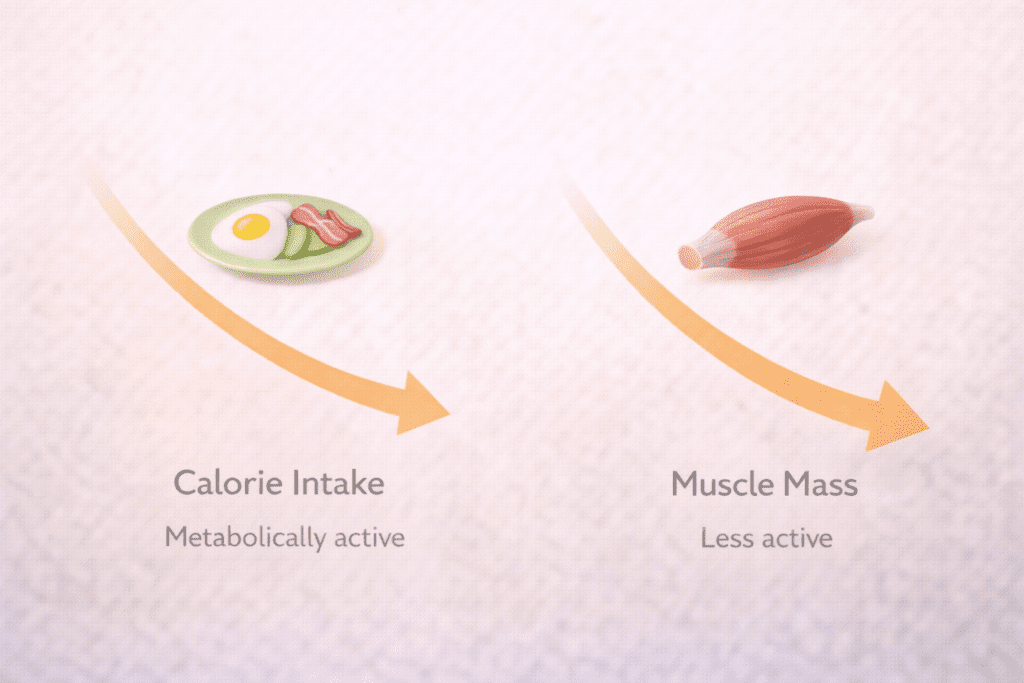
Many people go on a diet to lose weight without realizing what they’re losing. When calorie intake drops too low, the body doesn’t just burn fat. It can also break down muscle.
This is especially common with aggressive calorie deficit plans. When calories per day fall too far below energy needs, the body looks for fuel. Without enough protein or resistance training, muscle becomes part of that fuel source.
Over time, this creates a cycle:
- Less muscle
- Lower metabolism
- Fewer calories burned
- Slower fat loss
This is why some people regain weight after a weight-loss phase. Muscle loss lowers calorie needs, so returning to previous eating habits leads to extra calories being stored as fat.
A meta-analysis of long-term weight-loss studies has shown that muscle during weight loss plays a key role in whether people keep the weight off or experience weight regain.
Why This Becomes More Noticeable After 30
Younger adults often have more muscle and higher daily activity without trying. As people age, muscle mass naturally declines unless it’s maintained.
Older people don’t suddenly stop burning calories. But metabolism slows a little as muscle decreases and movement becomes less consistent. Hormonal changes, stress, and less physical activity can also contribute.
This doesn’t mean weight loss is impossible. It means the strategy needs to change.
Instead of focusing only on eating fewer calories, it becomes more important to:
- Maintain muscle
- Support fat loss without extreme dieting
- Match diet to actual energy needs
When muscle is preserved, the body can burn more calories even at rest. That makes weight loss more sustainable and reduces the risk of obesity over time.
Why Muscle Matters More Than the Scale
The scale only shows body weight. It doesn’t show body fat, fat-free mass, or how metabolically active your body is.
Two people can weigh the same but have very different metabolisms. One may have much muscle mass and burn more calories naturally. The other may have less muscle and require fewer calories just to maintain weight.
Tools like DXA and MRI scans show this clearly. People with higher muscle mass tend to have a higher metabolic rate and better long-term weight management outcomes.
This is why muscle loss slows metabolism in a way that’s easy to miss-but hard to reverse if ignored.
In the next sections, we’ll look at specific biological systems that influence muscle preservation and metabolism, including stress hormones, cellular energy, blood sugar balance, thermogenesis, protein intake, and sleep quality.
Stress, Cortisol, and How Muscle Loss Speeds Up Metabolic Slowdown

One reason muscle loss becomes such a problem after 30 is chronic stress. When stress levels stay high, the body releases more cortisol. In short bursts, that’s normal. Over time, it’s not.
Elevated cortisol can signal the body to break down muscle tissue for quick energy. When that happens repeatedly, muscle mass slowly declines. As muscle decreases, metabolism doesn’t stop-but it does become less efficient. The body starts using less energy at rest, which can make weight loss feel harder than it should.
Here’s what I noticed while researching this topic: people under constant stress often diet harder, not smarter. They eat fewer calories, sleep less, and train inconsistently. That combination increases muscle loss and can slow your metabolism even further.
This is why stress management matters when you’re trying to lose weight. Without addressing cortisol, the body may resist fat loss and protect energy stores instead.
In discussions around stress balance, Nagano Tonic is sometimes mentioned for its focus on supporting a calmer stress response rather than stimulation. The idea is to reduce unnecessary muscle breakdown linked to prolonged stress signals.
If you want to see how stress-focused support fits into a broader muscle-preservation approach, that’s usually covered in more detail on a full review page.
Cellular Energy, Muscle Efficiency, and Metabolism After 30
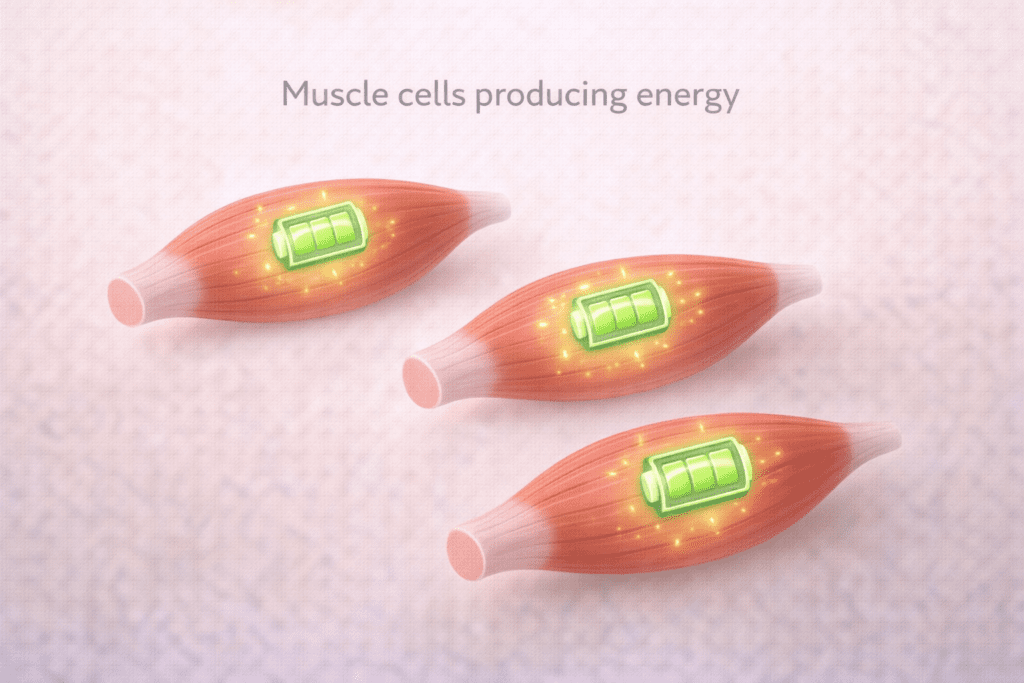
Another less obvious factor behind muscle loss and a slow metabolism is cellular energy production. Muscle isn’t just for movement-it’s one of the most energy-demanding tissues in the body.
Inside muscle cells, mitochondria convert food into usable energy. When cellular energy drops, muscle efficiency declines. Over time, this can contribute to less muscle being maintained, especially during dieting or periods of low activity.
This helps explain why some adults feel weaker, tire faster, and burn fewer calories even when they’re eating a similar diet. With less muscle working efficiently, the body needs fewer calories per day to function.
In this context, Mitolyn is often discussed around mitochondrial and cellular energy support. It’s not about forcing a fast metabolism, but about helping muscle cells function metabolically when energy levels feel low.
From my research, this approach tends to come up for people who feel stuck in a cycle of less energy, less movement, and gradual muscle loss. Internal review content usually explains how this type of support is positioned within a long-term strategy.
Blood Sugar, Insulin Balance, and Why Muscle Is Harder to Keep
Blood sugar control plays a bigger role in muscle preservation than most people realize. When blood sugar swings are frequent, insulin levels also rise and fall more sharply. Over time, this can make it harder for the body to protect muscle tissue-especially during weight loss phases.
Here’s what tends to happen. When blood sugar spikes and crashes, appetite increases and energy drops. People often respond by eating less or skipping meals to “stay on track.” In reality, this pattern can push the body to break down muscle for energy, particularly when protein intake is inconsistent.
Insulin balance matters because insulin helps shuttle nutrients into muscle cells. When that system becomes less efficient, the body may favor fat storage while muscle mass slowly declines. This is one reason muscle loss slows metabolism in a way that feels confusing and frustrating.
In conversations around blood sugar stability, Ikaria Lean Belly Juice is sometimes mentioned, mainly for its focus on supporting smoother insulin responses rather than rapid changes. The idea is to reduce sharp energy swings that can contribute to muscle breakdown over time.
If you want to see how blood sugar–focused support fits into a broader muscle-preservation approach, that’s usually explained in more detail on a dedicated review page.
Thermogenesis, Daily Movement, and Burning Fewer Calories Without Noticing

Another system affected by muscle loss is thermogenesis-the body’s ability to produce heat and burn calories throughout the day. Muscle plays a key role here. More muscle generally means higher daily energy use, even during simple activities.
When muscle mass declines, thermogenesis often drops as well. People may feel less energetic, move less, and burn fewer calories without realizing it. This creates a quiet energy gap that can lead to weight gain over time.
Sleep, stress, and dieting all influence this process. Poor recovery or aggressive calorie cuts can reduce muscle, which lowers thermogenic output. The result is a body that needs fewer calories but still feels hungry.
This is where Java Burn is often discussed in relation to daily energy use and morning routines. The focus is usually on supporting natural thermogenesis rather than overstimulation. It’s typically viewed as a complement to movement and consistency, not a replacement.
From what I’ve seen, thermogenesis improves most when muscle is preserved and daily movement stays steady. More detailed context on how this type of support fits into a routine is usually available through internal review content.
Protein Intake, Muscle Preservation, and Why It Matters More With Age
When muscle loss slows metabolism, protein becomes one of the most practical levers people can control. After 30, the body doesn’t hold onto muscle as easily as it once did-especially during weight loss.
Here’s where many people get tripped up. They go on a diet to lose weight, cut calories aggressively, and don’t eat enough protein. In that situation, the body may use muscle tissue for energy. Less muscle means fewer calories burned per day, which can slow progress and increase the risk of weight regain later.
Maintaining muscle isn’t about extreme eating. It’s about meeting basic protein needs and pairing that intake with resistance training when possible. When muscle is preserved, the body can burn more calories at rest and handle fat loss more efficiently.
This is why structured, protein-focused approaches are sometimes discussed. The Smoothie Diet often comes up in conversations around simplifying protein intake during weight-loss phases. The focus isn’t on restriction, but on making it easier to meet nutritional needs while protecting muscle mass.
From my research, protein support works best when it’s consistent and realistic. It doesn’t need to be perfect. It just needs to be steady. Review pages usually explain how this kind of approach fits into a long-term maintenance plan.
Sleep Quality, Hormonal Recovery, and Muscle Breakdown
Sleep plays a direct role in whether muscle is maintained or lost over time. Poor sleep affects hormonal balance, recovery, and how the body repairs muscle tissue overnight.
When sleep quality is low, cortisol tends to stay elevated, and recovery hormones don’t work as efficiently. Over time, this can increase muscle breakdown and make it harder to maintain muscle during weight loss. That combination can slow metabolism without people realizing why.
Sleep also affects motivation and training consistency. When energy is low, resistance training often drops off first. Less training means less muscle stimulus, which speeds up muscle loss even further.
This is why sleep support often comes up in muscle-preservation discussions. SleepLean is commonly mentioned in the context of supporting better sleep quality and nighttime recovery. The idea is to help the body settle into deeper rest so hormonal systems can reset properly.
Personally, I think sleep is one of the most underrated factors in metabolism. When sleep improves, people often find it easier to eat consistently, train regularly, and maintain muscle over time. More detailed explanations are usually available through internal review content.
Putting It All Together: Why Muscle Loss Changes the Rules
Muscle loss doesn’t just affect strength. It changes how metabolism works.
When muscle declines, the body needs fewer calories, burns less energy, and becomes more efficient at storing fat. That’s why weight loss strategies that worked in the past may stop working after 30.
The key takeaway isn’t to eat less and push harder. It’s to protect muscle while pursuing fat loss. That means:
- Avoiding extreme calorie cuts
- Prioritizing protein
- Managing stress
- Sleeping well
- Staying consistent with movement
Small adjustments in these areas can make a meaningful difference over time.
Final Verdict

Muscle loss slows metabolism in a quiet but powerful way.
It doesn’t happen overnight, and it’s not caused by one mistake. It’s usually the result of repeated dieting, low protein intake, poor sleep, and reduced resistance training over time.
The good news is that muscle loss isn’t inevitable. With the right habits, it’s possible to maintain muscle, support metabolism, and make weight loss more sustainable after 30.
Consistency matters more than intensity.
Frequently Asked Questions (FAQs)
Why does muscle loss slow metabolism?
Muscle tissue burns more calories than fat at rest. When muscle is lost, the body needs fewer calories, which lowers daily energy use.
Can I lose weight without losing muscle?
In many cases, yes. Adequate protein intake, resistance training, and proper sleep all help preserve muscle during weight loss.
Does eating fewer calories always slow metabolism?
Not always. But aggressive or prolonged calorie deficits can lead to muscle loss, which can slow metabolism over time.
Is resistance training necessary after 30?
It’s strongly recommended. Resistance training helps maintain muscle mass, which supports metabolism and long-term weight management.
How long does it take to lose muscle?
Muscle loss can begin within weeks of inactivity or severe calorie restriction, especially in adults over 30.
One Last Thought
If weight loss feels harder than it used to, it’s easy to assume something is “wrong” with your metabolism.
Often, nothing is broken. The body is just adapting to less muscle, less recovery, and less fuel than it needs.
Protecting muscle doesn’t require extreme plans. It requires paying attention to sleep, protein, stress, and consistency-day after day. When those pieces are in place, metabolism tends to take care of itself.