

Stress eating and weight gain after 30 refers to a pattern where emotional or mental stress influences eating behavior in ways that gradually affect body weight. It’s not about a single bad habit or a lack of discipline. It’s about how stress interacts with appetite, hormones, and daily routines as the body changes with age.
After 30, this pattern often becomes more noticeable. Food choices shift during stressful moments, recovery from stress takes longer, and weight gain can happen slowly even when eating habits feel familiar. Understanding this connection helps remove blame and creates space for more realistic expectations.
Who This Article Is For
This article is for adults over 30 who feel stuck in cycles of stress driven eating. It’s also for people noticing gradual weight gain despite similar routines, especially busy professionals, parents, or caregivers managing ongoing stress.
If you’re looking for non restrictive, realistic ways to understand eating behavior without guilt, this information is meant to support awareness rather than control.
Why Stress and Eating Patterns Change After 30

Life after 30 often brings more responsibility. Work pressure, family demands, and financial concerns increase mental load. These stressors don’t just affect mood. They influence eating behavior in subtle ways.
Recovery time from stress also shortens. The body stays in a heightened state longer, which can affect appetite and decision making around food. When stress levels remain elevated, it becomes easier to overeat without realizing it.
Sleep disruption becomes more common as well. Poor sleep affects hunger hormones and increases cravings for quick energy foods. This makes emotional regulation around food harder, even for people who were previously consistent.
As these factors combine, willpower alone feels less effective. The issue isn’t motivation. It’s how stress reshapes behavior and metabolism over time.
The Biological Reasons Behind Stress Eating and Weight Gain After 30
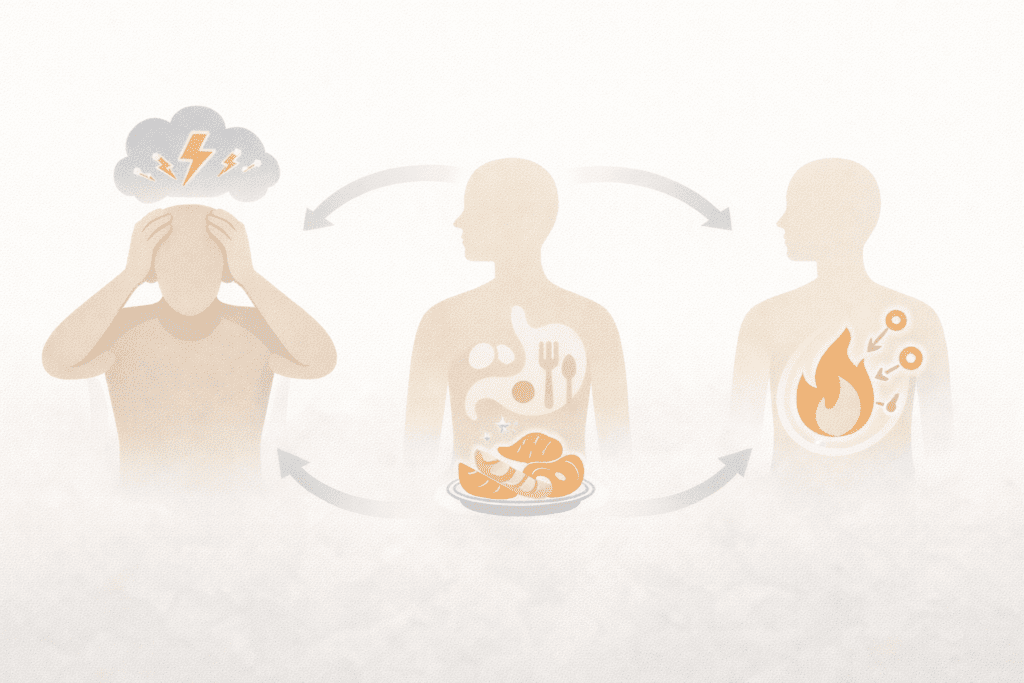
Stress doesn’t just change mood. It triggers physical responses that directly affect eating behavior and how the body stores energy. After 30, these responses tend to feel stronger and last longer, which helps explain why stress eating and weight gain after 30 often develop gradually.
Cortisol’s Role in Appetite and Fat Storage
Cortisol is a hormone released during stress. In short bursts, it helps the body respond to challenges. When stress becomes ongoing, cortisol levels stay elevated longer than they should.
Higher cortisol can increase appetite and push the body toward storing fat, especially around the waistline. This pattern is linked to central fat storage rather than evenly distributed weight gain. Over time, this hormonal response can cause weight gain even when total food intake does not feel excessive.
This is one reason stress may cause sudden weight gain during prolonged high pressure periods.
Blood Sugar Swings Increasing Cravings
Stress affects how insulin works in the body. When stress is frequent, blood sugar regulation can become less stable. These swings often trigger cravings for quick energy foods.
Foods high in sugar or refined carbohydrates temporarily raise blood sugar, then lead to sharp drops. That cycle can make people feel hungrier and more likely to snack, even without physical hunger. Repeated cycles like this are linked to weight gain and difficulty managing appetite.
Stress Effects on Digestion and Nutrient Use
Stress diverts energy away from digestion. During stressful periods, the body prioritizes survival responses over nutrient absorption.
Poor digestion can lead to less efficient use of food and increased fat storage. Over time, this contributes to slowing metabolism and reduced energy availability. These changes often happen quietly and are easy to miss until weight gain becomes noticeable.
Hormonal Shifts Influencing Hunger Signals
After 30, hormonal balance becomes more sensitive. Estrogen changes, adrenal activity, and shifts in hunger hormones can all influence how the body responds to food during stress.
Stress can interfere with signals that tell the brain when enough food has been eaten. This makes it easier to overeat without realizing it. In some cases, this pattern becomes linked to emotional eating rather than physical hunger.
These biological changes explain why stress related eating feels harder to control with age. The body is responding to stress signals, not a lack of effort.
Lifestyle Factors That Reinforce Stress Eating Habits

Biology explains part of the picture, but daily routines often reinforce eating patterns during stressful periods. After 30, lifestyle structure becomes just as influential as hormones.
Time Pressure and Irregular Meal Patterns
Busy schedules make regular meals harder to maintain. Skipping meals or eating at unpredictable times increases hunger later in the day.
When meals are delayed, appetite becomes stronger and harder to regulate. This increases the chance of overeating once food is available and can contribute to weight gain over time.
Emotional Eating as a Coping Mechanism
Food can become a quick way to relieve stress when emotional pressure builds. This response isn’t conscious most of the time.
Turning to food for comfort often happens during mental fatigue, not physical hunger. Over time, this pattern becomes linked to emotional eating rather than true energy needs.
Reduced Physical Activity During Stressful Periods
Stress often reduces movement. Long work hours, mental exhaustion, or low motivation can lead to a sedentary lifestyle.
Lower physical activity affects muscle mass and energy use. When movement decreases while intake stays the same, weight gain becomes more likely.
A typical workday with skipped lunch, late snacking, and little movement can quietly add hundreds of extra calories without feeling excessive.
Poor Sleep Amplifying Hunger and Cravings
Poor sleep disrupts hunger hormones and increases appetite the next day. It also raises cortisol levels, which further influences food choices.
When sleep is consistently short, cravings become stronger and harder to manage. This pattern is closely linked to weight gain and metabolic imbalance.
How Stress Eating Affects Weight and Metabolism
Stress driven eating often leads to a calorie surplus without obvious overeating. Quick snacks and high calorie foods are easier to reach during mental fatigue.
Chronic stress also interferes with metabolism by altering insulin response and slowing energy regulation. Over time, this can lead to weight gain that feels unexplained.
Fat storage becomes more centralized around the midsection as cortisol remains elevated. This shift is commonly noticed after 30 and is linked to hormonal changes rather than effort alone.
Signs You May Be Stress Eating Without Realizing It
Eating without physical hunger is one of the clearest signs. Food choices often feel automatic rather than intentional.
Cravings triggered by emotions or pressure, not hunger, are another signal. Mindless or rushed eating during work or late evenings is also common.
Using food for comfort, distraction, or relief often leads to guilt afterward. These patterns tend to repeat during high stress periods.
Stress Hunger vs Physical Hunger
Stress hunger appears suddenly and feels urgent. It often targets specific comfort foods and doesn’t fade after eating.
Physical hunger builds gradually. It’s felt in the body and is satisfied by a variety of foods.
Learning the difference reduces guilt and overeating. Awareness alone often improves eating behavior before weight changes appear.
Practical Ways to Reduce Stress Eating Without Restriction
Reducing stress eating starts with awareness, not control. Noticing when stress drives food choices helps interrupt automatic habits without adding pressure.
Supporting digestion and blood sugar balance can also help regulate appetite. Regular meals, steady hydration, and balanced food choices make stress responses easier to manage.
Small habit changes matter more than drastic rules. Simple routines that lower stress levels often reduce the urge to overeat during emotional moments.
Some people also explore gentle daily wellness support like Nagano Tonic as part of a broader routine focused on digestion, stress balance, and metabolic support. This approach is about complementing habits, not replacing them.
Common Reactions That Can Make Stress Eating Worse
Over restricting after stress eating episodes often backfires. It increases hunger and reinforces guilt.
Skipping meals to compensate can disrupt appetite signals and increase cravings later. Using exercise as punishment adds stress rather than relief.
Expecting perfection during high stress periods creates pressure. Stress eating patterns tend to improve with flexibility, not rigid rules.
Common Myths About Stress Eating and Weight Gain After 30
Stress eating is not a lack of discipline. It’s a biological and behavioral response to pressure.
Cutting calories does not fix stress related weight gain. In some cases, restriction can increase cortisol and worsen appetite swings.
Stress affects more than mood. It can influence appetite regulation, fat storage patterns, and overall metabolic balance over time.
Avoidiading favorite foods doesn’t reduce stress eating. Balance and permission usually work better than avoidance.
What to Expect When You Start Addressing Stress Eating
Behavior changes happen gradually. Reduced cravings often appear before visible weight changes.
Setbacks are normal during high stress periods. Progress is rarely linear.
Consistency matters more than perfection. Over time, small adjustments support better overall health and weight stability.
Before We Get to the FAQs
Stress eating patterns take time to change because they are learned responses. Awareness often improves first, while weight changes follow later.
Patience supports long term success. Quick fixes rarely address the underlying causes of stress eating.
FAQs About Stress Eating and Weight Gain After 30
What causes stress eating and weight gain after 30?
Stress eating and weight gain after 30 are influenced by hormonal changes, increased cortisol, and slower recovery from stress.
Why does stress increase cravings for certain foods?
Stress affects appetite and blood sugar regulation, increasing cravings for high calorie comfort foods.
Can stress eating lead to belly fat after 30?
Yes. Elevated cortisol can promote centralized fat storage around the waistline.
How does cortisol affect stress eating and weight gain after 30?
Cortisol increases appetite and encourages fat storage during prolonged stress.
Does poor sleep worsen stress eating habits?
Poor sleep disrupts hunger hormones and increases stress levels, making overeating more likely.
Can stress eating slow metabolism over time?
Chronic stress can interfere with metabolic balance and appetite regulation, contributing to gradual weight gain.
How long does it take to reduce stress eating patterns?
Improvement often starts within weeks, but lasting change takes consistent habits over time.
Can lifestyle changes help with stress eating and weight gain after 30?
Yes. Managing stress, sleep, and routines supports better eating behavior.
Is stress eating harder to control with age?
For many people, yes. Hormonal and lifestyle changes make stress responses stronger after 30.
Can digestion support reduce stress related cravings?
Supporting digestion may help regulate appetite and reduce stress driven cravings.
Why does stress eating cause weight gain after 30?
As people pass 30, metabolism slows for many, and stress can make you crave high-calorie or high-fat and sugary foods. Stress raises a hormone called cortisol, which can increase appetite and make the body store more fat. Together these factors can contribute to gradual weight gain over time.
Can stress-related eating affect long-term weight?
Over time, frequent stress-driven eating can contribute to gradual weight gain, especially when combined with poor sleep and low activity levels. Individual responses vary widely.
How do hormonal changes influence stress eating after 30?
As people move through their 30s and beyond, natural hormonal shifts can affect appetite cues and how the body responds to stress. These changes may make stress-related eating patterns feel more noticeable over time.
How can mindful eating help with weight and health goals?
Mindful eating helps you notice hunger, fullness, and cravings before you overeat. It can reduce stress-related eating by slowing down how you eat and choosing healthier, lower-calorie options. This approach supports physical health and can help with weight management.
Are there safe strategies to relieve stress without turning to sugary or high-fat foods?
Yes. Try exercise, deep breathing, sleep, talking with friends, or short breaks during work. These help lower cortisol and reduce cravings. Planning healthy snacks and keeping high-calorie temptations out of sight can also help.
When should I consider talking to a healthcare professional?
If weight changes feel sudden, persistent, or concerning, speaking with a healthcare professional can help provide clarity and reassurance.
Important Note on Health and Individual Needs
This article is for educational purposes only and focuses on general lifestyle patterns. Stress, weight changes, and eating behaviors vary widely. For persistent or concerning changes, speaking with a healthcare professional can provide clarity and reassurance.

One Last Thought
Stress eating is not a personal failure. Understanding stress eating and weight gain after 30 allows for more realistic, compassionate approaches that focus on awareness, balance, and sustainable habits rather than control.