

Most adults in the U.S. notice something frustrating once they hit their 30s. The scale doesn’t move like it used to. Jeans feel tighter around the belly, even when eating habits haven’t changed much. And no matter how many times you measure with a tape measure, that number around the waist just won’t budge.
Let’s keep it simple. This isn’t about willpower. And it isn’t because people suddenly stop caring about their health after 30. In most cases, belly fat is harder to lose after 30 because the body itself changes-slowly, quietly, and often without warning.
Here’s what I noticed while researching this topic: many articles jump straight to extreme solutions. Cut everything. Train harder. Do more cardio. But that advice usually skips the “why.” And without understanding the “why,” people end up trying random fixes that don’t work long term.
This article is meant to slow things down and explain what’s actually happening-without hype, fear, or promises. Just clear explanations you can use.
What People Mean by “Belly Fat” (And Why It’s Different After 30)
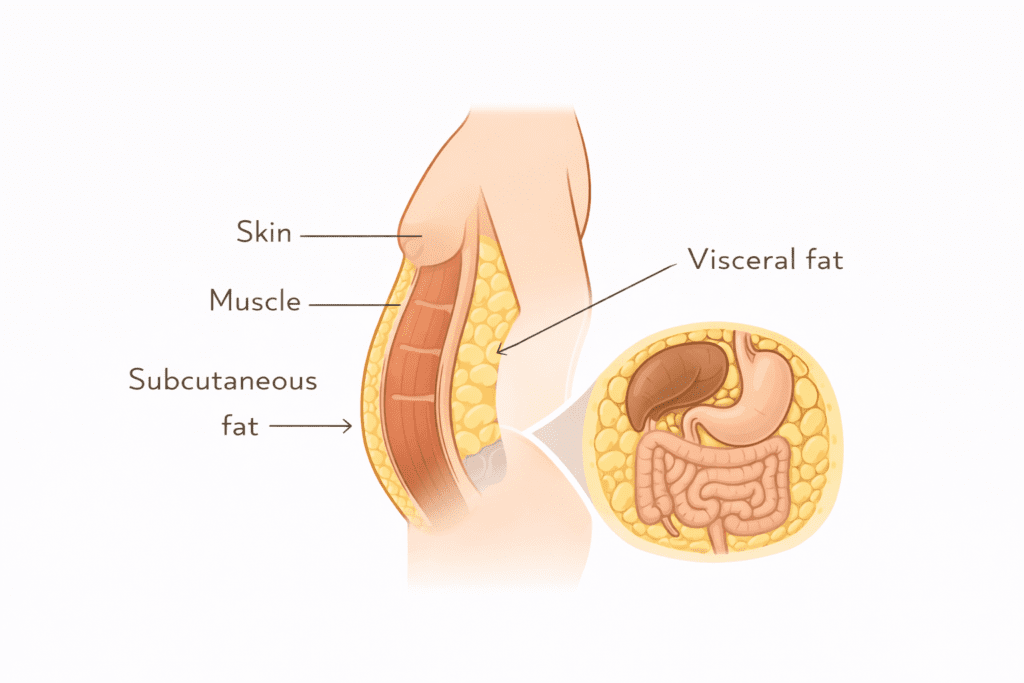
When most people talk about fat around the middle, they’re usually talking about more than one thing.
There’s subcutaneous fat, which sits just under the skin. You can pinch it. Then there’s visceral fat, which lies deeper, closer to the internal organs. This deeper fat in your abdomen is often what changes with age.
Here’s the thing: visceral fat makes the body behave differently than surface-level fat. It responds more strongly to hormones, stress, and sleep. And as people get older, the body’s fat distribution tends to shift toward the abdomen.
From my research, this shift doesn’t usually happen overnight. It builds slowly-year by year-until one day you realize your midsection looks different even though your routine feels familiar.
This is one big reason stubborn belly fat shows up after 30.
Metabolism After 30: Slower, But Not Broken
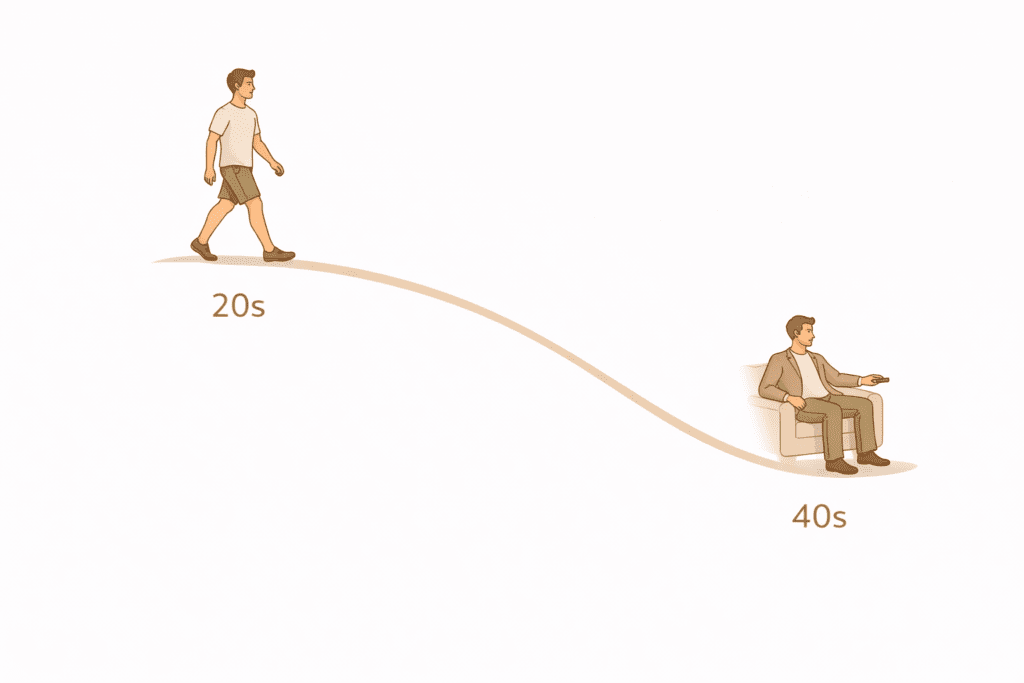
A common myth is that metabolism suddenly “crashes” at 30. That’s not quite true. The metabolic rate does slow, but gradually.
What changes more noticeably is how the body handles fat storage.
As muscle declines-often due to less physical activity and less strength training-the body burns fewer calories at rest. That doesn’t mean weight gain is guaranteed, but it does mean the margin for error gets smaller.
Eating the same meals that worked at 25 may now lead to weight gain, especially around the abdominal area. This is why many people say it’s harder to lose weight later in life.
Not impossible. Just different.
Hormones Start Playing a Bigger Role

After 30, hormone shifts begin to matter more than calories alone.
In women, changes in estrogen-especially during menopause-can influence where fat is stored. In men, gradual drops in testosterone can affect muscle mass, which in turn impacts fat loss.
Stress also becomes a bigger factor. The stress hormone cortisol tends to stay elevated longer in adults juggling work, family, and sleep debt. And yes, higher cortisol levels are linked to increased abdominal fat in many people.
Is this true for everyone? Not always. There are exceptions. But in most cases, hormones make the body more likely to store fat in the belly rather than distribute it evenly.
Insulin, Blood Sugar, and the 30+ Body
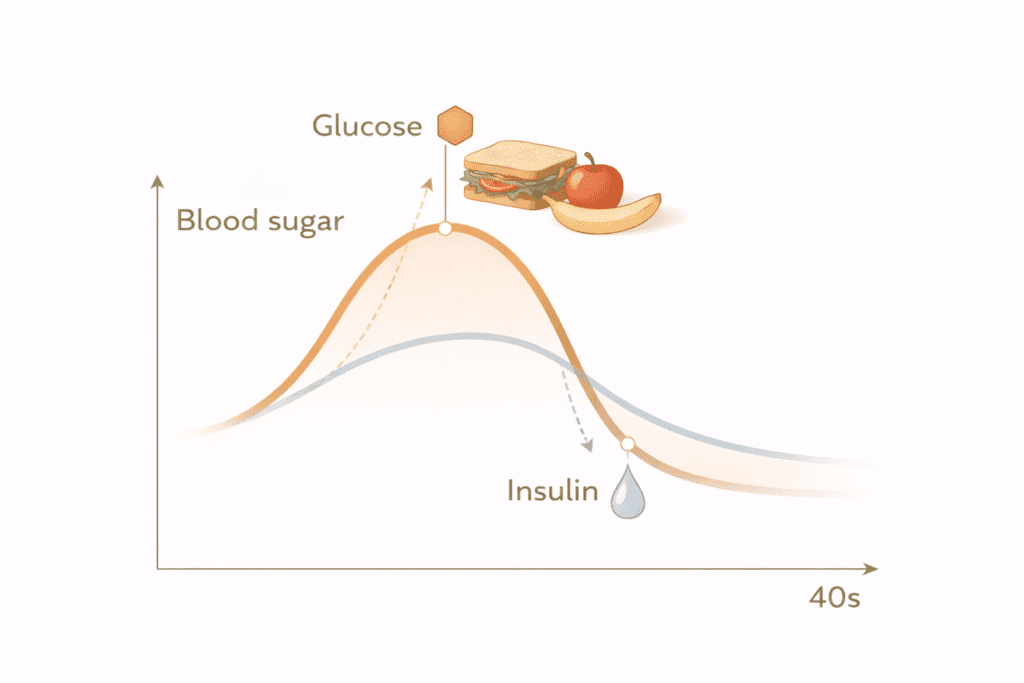
Another reason belly fat is harder to lose after 30 is how the body responds to carbs and sugar.
As people age, some develop mild insulin resistance. This doesn’t mean diabetes-but it does mean the body may shuttle excess energy into fat cells more easily, especially around the waist.
Over time, this contributes to excess fat in the abdominal region. According to sources like Harvard Health Publishing, this pattern is common in adults who feel like they’re “doing everything right” but still can’t slim their middle.
This is also why fat isn’t just about looks. Abdominal and visceral fat are linked to cardiovascular disease, type 2 diabetes, and other risk of health problems when left unchecked.
Lifestyle Shifts That Add Up (Without You Noticing)

Here’s where real life comes in.
After 30, people usually:
- Sit more
- Sleep less
- Train less consistently
- Eat faster, often under stress
None of these alone cause obesity. But together? They reduce the body’s ability to lose stored fat efficiently.
Most adults don’t stop moving entirely-but they move less than they think. Even small drops below least 150 minutes a week of movement can change long-term fat reduction patterns.
And while exercise can help, it has to match the body you have now-not the one you had at 22.
Why Diet Alone Often Stops Working
Many people respond by eating fewer calories. Sometimes that helps. Often, it backfires.
When protein intake drops, muscle mass declines faster. That lowers daily energy use and makes fat loss harder-not easier.
That’s why many care provider guidelines emphasize a balanced diet, adequate protein, and resistance-based movement rather than extreme restriction.
From what I’ve seen, people who focus only on eating less often end up frustrated, tired, and stuck with the same waist size.
The Biological Triggers That Make Belly Fat Stick Around After 30
Before getting into supportive tools, it helps to understand which internal switches usually change after 30. This is where people often get confused. They think fat shows up because effort dropped. In reality, the body’s priorities quietly shift.
From my research, three systems matter most early on: stress response, cellular energy, and blood sugar control. When these drift out of balance, fat storage around the belly becomes more likely-even when you’re eating fairly well.
Let’s break these down one by one, and then look at how certain products are sometimes used to support each area. No comparisons. No selling. Just context.
1) Stress, Cortisol, and Abdominal Fat
Here’s the thing most people overlook: stress doesn’t just live in your head. It shows up in your abdomen.
When stress becomes constant, the body releases more cortisol, a key stress hormone. In short bursts, cortisol is helpful. It keeps you alert. But when levels stay high-work pressure, poor sleep, financial stress-the body starts to store fat, especially abdominal fat.
According to sources often cited by Harvard Health Publishing, higher cortisol levels are linked to increased visceral fat, which sits closer to the organs and behaves differently than surface fat. This is one reason people feel like their belly is growing even though their arms and legs haven’t changed much.
Personally, I think this is why stress management matters more after 30 than people admit. You can eat clean and still struggle if stress stays unchecked.
Some people use Nagano Tonic as a supportive option in this area because its positioning focuses on relaxation and cortisol balance. It isn’t a cure, and it won’t override lifestyle habits. But in most cases, it’s discussed as a tool meant to support stress response rather than force weight loss.
If you want more detail, this is usually where a deeper internal review of Nagano Tonic fits naturally.
2) Cellular Energy Decline and Fat Storage
Now this is where things get less obvious.
As we get older, the tiny energy centers inside cells-called mitochondria-don’t work as efficiently. When cellular energy drops, the body becomes less eager to burn stored fuel. Instead, it tends to keep fat as a backup.
This doesn’t mean calories suddenly stop working. It means the body’s ability to lose stored fuel slows down.
From what I noticed reading material linked to Harvard Medical School, reduced mitochondrial efficiency is associated with changes in total body fat and body fat percentage over time. That’s one reason people say fat “feels different” after 30.
This shift affects both subcutaneous fat and visceral fat, but the deeper fat lies closer to the organs, making it harder to access.
Mitolyn is often mentioned in this context because it focuses on cellular energy and mitochondrial support. It isn’t framed as something that magically burns fat. Instead, it’s positioned around improving how cells produce energy-which may support better fat reduction when paired with consistent habits.
Is it the best option? Honestly, it depends on the person. But this is typically where it fits conceptually, and a separate internal review can explain that in more detail.
3) Blood Sugar Swings and Belly Fat Accumulation
Blood sugar control becomes more important after 30-whether people realize it or not.
When blood sugar spikes often, the body releases more insulin. Over time, this can lead to insulin resistance, making it easier for the body to push energy into fat cells instead of using it. This is especially true for fat in your abdomen.
According to guidance often referenced by Mayo Clinic, unstable blood sugar patterns are linked to increased waist size and a higher chance of storing excess fat centrally. This is why some adults develop a classic beer belly even without drinking much alcohol.
Ikaria Lean Belly Juice is commonly discussed in relation to blood sugar and insulin balance. Its positioning focuses on helping the body manage glucose more smoothly rather than forcing rapid weight loss.
In most cases, it’s used alongside normal meals, not as a replacement for a balanced diet. And like anything else, results vary. There are exceptions.
For readers who want specifics, this is typically where an internal review link adds value without interrupting the educational flow.
Daily Timing, Muscle Protection, and Sleep – The Overlooked Drivers
Now this is where a lot of people in the U.S. get stuck.
They understand stress. They understand blood sugar. But they underestimate timing. When you eat, how you start your morning, how much muscle you preserve, and how well you sleep all affect how fat behaves after 30.
From my research, these next three areas don’t usually cause problems on their own. But combined, they can quietly make belly fat is harder to lose after 30 feel like an unsolvable issue.
Let’s walk through them carefully.
4) Morning Metabolism and Heat Production
Mornings matter more than people think.
After waking up, the body naturally goes through a short window where energy use can increase. This process-often called thermogenesis-is basically how the body produces heat and burns fuel early in the day.
Here’s the problem: many adults skip breakfast, rush out the door, or start the day stressed. When that happens, the body doesn’t fully activate this process. Over time, that can affect fat storage, especially in the belly.
This doesn’t mean breakfast is mandatory for everyone. There are exceptions. But in most cases, mornings set the tone for how the body handles energy.
Java Burn is usually mentioned in this context because it’s designed to be taken in the morning, often with coffee. Its positioning focuses on supporting early-day thermogenesis rather than forcing rapid weight loss.
Personally, I think this is why some people feel better when their mornings are consistent-even if the rest of the day isn’t perfect. Java Burn isn’t about magic. It’s about supporting a natural process that already exists.
For readers who want details, this is typically where an internal review fits naturally.
5) Muscle Loss, Protein Intake, and Fat Gain
One of the most overlooked reasons people struggle to lose weight after 30 is muscle loss.
As muscle mass declines, the body burns fewer calories at rest. That doesn’t just affect the scale-it changes how the body manages fat. Less muscle often means more fat storage, particularly around the midsection.
This is why relying only on cardio doesn’t always work. Without enough protein and resistance work, the body may burn muscle instead of body fat.
Programs like The Smoothie Diet are often discussed because they emphasize protein intake in an easy format. The idea isn’t starvation. It’s preserving muscle while reducing excess calories in a controlled way.
From what I’ve seen, people who maintain protein intake while adding light strength training (even least twice a week) tend to have an easier time protecting muscle and supporting long-term fat reduction.
Is a smoothie plan right for everyone? No. But the principle-protecting muscle to support fat loss-is hard to ignore.
This is another place where an internal review can give readers more context without pushing them.
6) Sleep, Hormones, and Overnight Fat Signals
Sleep is the quiet factor most people ignore.
When sleep quality drops, hunger hormones rise. Stress hormones stay elevated. And the body becomes more likely to hold onto fat, especially visceral fat.
According to information often cited by Harvard Health Publishing, poor sleep is linked to increased waist size and difficulty managing abdominal fat. Even when diet looks good on paper, lack of rest can block progress.
This is where SleepLean usually comes into the conversation. Its positioning focuses on improving quality sleep and nighttime recovery rather than stimulating the body.
In most cases, it’s discussed as a nighttime support-helping the body settle, recover, and rebalance hormone signals overnight. It won’t override bad habits, but it may support recovery when sleep is the weak link.
Honestly, this is one area where people expect fast results and don’t get them. Sleep improvements take time. But when they happen, many notice changes in how their belly responds.
Again, a deeper internal review can explain that without turning this into a sales pitch.
Putting It All Together + Final Verdict & FAQs
Let’s be real for a second.
By the time most adults in the U.S. reach their 30s, they’ve already tried something to slim down their belly. Cutting carbs. Walking more. Maybe even extreme plans that worked once-but not anymore. That’s usually when frustration kicks in.
And this is the key takeaway from everything we’ve covered so far:
Belly fat is harder to lose after 30, not because you’re failing-but because your body is operating under a new set of rules.
That doesn’t mean progress is off the table. It just means the strategy has to change.
What Actually Matters After 30 (No Hype)
From my research-and from patterns repeated across sources like Harvard Health Publishing and Mayo Clinic-successful fat management after 30 usually comes down to alignment, not extremes.
Here’s what that alignment looks like:
- Managing stress so cortisol doesn’t signal the body to hold fat
- Supporting cellular energy so the body doesn’t default to fat storage
- Keeping blood sugar steady to reduce insulin resistance
- Protecting muscle mass to keep metabolism responsive
- Sleeping well enough for hormone recovery
- Staying consistent with realistic lifestyle changes
Notice what’s missing?
No crash diets. No guaranteed results. No promises to “get rid of belly fat” in days.
That kind of messaging usually ignores how the body actually works after 30.
Where Supportive Tools Fit (And Where They Don’t)
Let’s clear something up.
Supportive products-like the ones discussed earlier-don’t replace diet and exercise, and they don’t force the body to burn fat. In most cases, they’re used to support one specific biological process that tends to weaken with age.
- Stress support
- Energy production
- Blood sugar balance
- Morning activation
- Protein intake
- Sleep quality
That’s it.
Personally, I think problems start when people expect one tool to solve everything. That’s rarely how the body responds. Tools work best when they support habits-not replace them.
If you’re exploring any of these options, internal reviews are usually the safest way to learn more at your own pace, without pressure.
Final Verdict: So What Does This Mean for You?

Bottom line?
If you’re over 30 and struggling with stubborn belly fat, you’re not alone-and you’re not broken.
Your body is prioritizing safety, recovery, and energy storage differently than it did in your 20s. That shift affects where fat is located, how quickly it moves, and how easily it responds.
The people who make progress long-term tend to:
- Focus on consistency, not speed
- Protect muscle instead of just cutting calories
- Improve sleep instead of pushing harder
- Make small adjustments they can maintain
That’s how you support a healthy weight and maintain a healthy weight over time-without burning out.
Is it slower? Usually, yes.
Is it possible? Absolutely.
Frequently Asked Questions (FAQs)
Why is belly fat harder to lose after 30 even when I eat less?
Because eating fewer calories alone doesn’t address hormonal shifts, muscle loss, or stress signals. In many cases, the body adapts by slowing energy use and protecting stored fat, especially in the abdomen.
Is visceral fat more dangerous than other fat?
Yes. Visceral fat surrounds the organs and is linked to cardiovascular disease, type 2 diabetes, and increased risk of health problems. That’s why doctors often track waist size in addition to scale weight.
Can exercise alone reduce belly fat after 30?
Exercise helps, but it works best when combined with enough protein, sleep, and stress management. High-intensity interval training, weight training, and regular movement (at least 30 minutes, least 150 minutes a week) tend to be more effective than cardio alone.
Why does fat collect in the midsection as I get older?
Age-related changes in fat distribution, hormones, and muscle mass make the body more likely to store fat in your abdomen. This is especially common during menopause and periods of chronic stress.
Should I talk to a care provider about belly fat?
If you’re concerned about rapid changes, underlying conditions, or your body mass index, it’s a good idea to speak with a health care provider. They can help assess overall health-not just appearance.
Is it still possible to reduce belly fat after 30?
Yes. It usually takes more patience and consistency, but many adults do reduce belly fat through steady habits, realistic goals, and supportive routines that fit their lifestyle.
One Last Thought
If you’re in the U.S. and just starting-or restarting-your journey after 30, don’t aim for perfection. Aim for progress you can repeat.
That’s what actually lasts.