

For many adults, weight loss once followed a simple rule: eat fewer calories and the scale moves. That approach worked for years. You reduced your calorie intake, stayed consistent, and saw progress.
Then, after 30, something changes.
People start cutting calories again, sometimes even more carefully than before. They track meals, avoid extra snacks, and stay disciplined. Yet weight loss slows down, stalls, or completely stops. Some even notice weight gain, which feels confusing when effort hasn’t dropped.
This is a common experience in the U.S., especially among adults who are genuinely trying to lose weight. And it leads many people to think they’re doing something wrong.
Here’s the thing: in most cases, the problem isn’t discipline. It’s not laziness. And it’s not a lack of motivation.
The real issue is that the body responds differently to calorie cutting as we get older.
After 30, the same calorie deficit that once helped you lose weight can trigger new adaptations. The body becomes more protective of its energy. It adjusts how many calories it uses. And it prioritizes survival over continued fat loss.
That’s why calorie cutting stops working after 30 for so many people-even when they’re consistent and careful.
This doesn’t mean calorie awareness is useless. Calories still matter. But they stop being the only factor that controls weight loss.
Understanding this shift is the first step to avoiding frustration and making smarter adjustments later on.
Why Cutting Calories Becomes Less Effective After 30
Before calorie cutting stops working, the body goes through quiet changes. These changes don’t happen all at once. They build slowly, which is why many adults don’t notice them right away.
Most people assume weight loss is only about eating less. That idea works well when the body is younger. After 30, the rules begin to shift.
Here are the main reasons.
1. The Body Adapts to a Calorie Deficit Faster
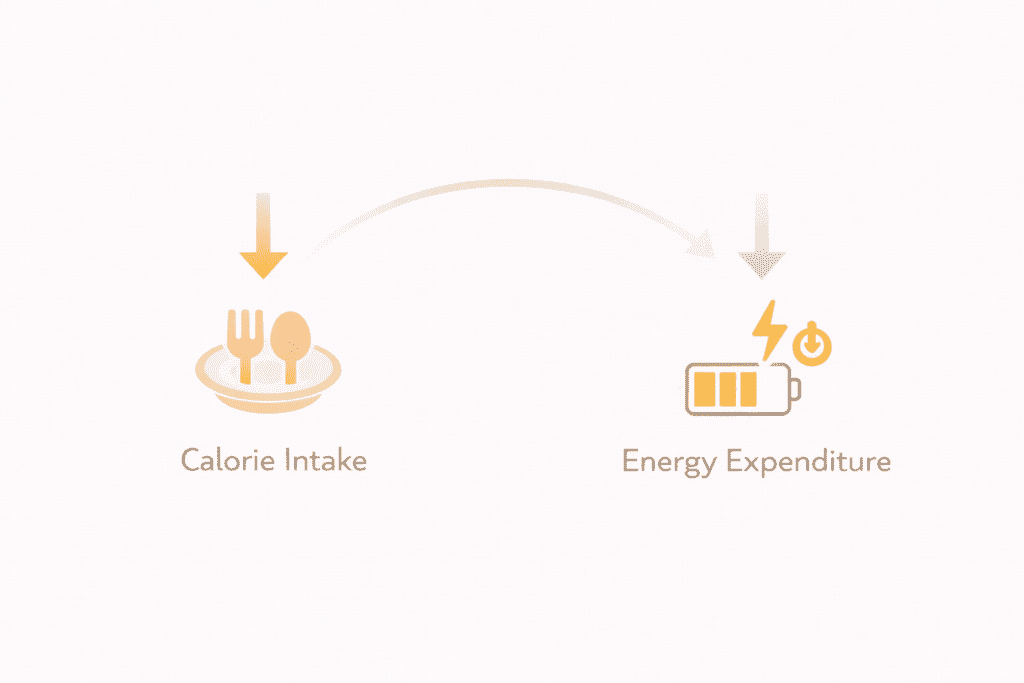
When you reduce your calorie intake, the body doesn’t just lose weight. It also adapts.
After 30, the body becomes better at conserving energy. When it senses a calorie deficit, it lowers energy expenditure to protect itself. This means you burn fewer calories throughout the day-even if your routine stays the same.
Over time, this adaptation can slow weight loss and lead to a weight loss plateau.
This is why eating fewer calories again and again often stops producing results.
2. Metabolism Slows With Age
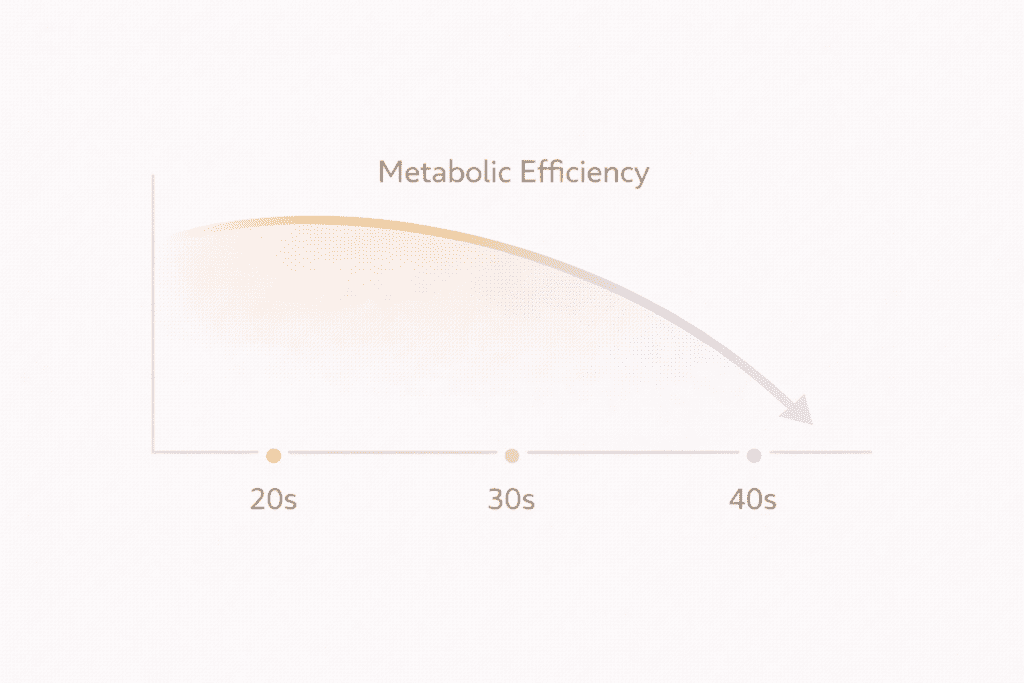
Another key factor is metabolism.
As people get older, metabolism becomes slightly less flexible. The body burns energy more efficiently and wastes less. While that sounds helpful, it actually makes weight loss harder.
This shift means the same number of calories that once supported weight loss may now only maintain your current body weight.
That’s why many adults feel stuck even though they’re eating carefully.
3. Muscle Loss Reduces Daily Calorie Burn
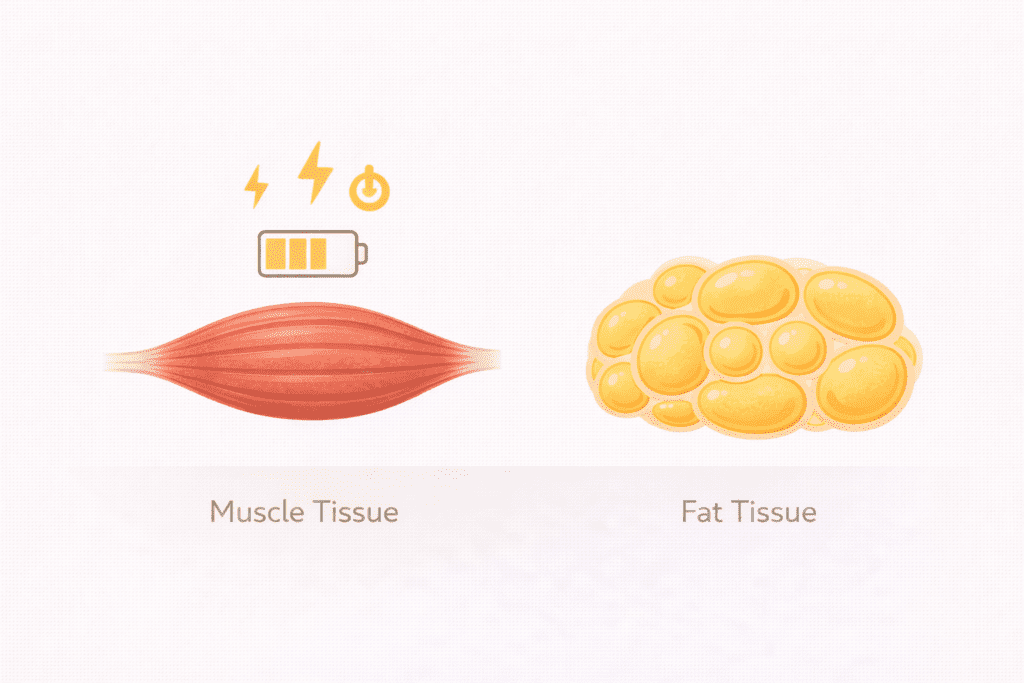
After 30, gradual muscle loss becomes more common-especially for people who rely only on diet changes.
Muscle helps burn calories at rest. When muscle declines, the body burns fewer calories all day long. This lowers total energy expenditure and slows weight loss progress.
Without enough resistance work or protein, people may lose muscle instead of fat, making future weight loss even harder.
4. Hormones Influence Hunger and Fat Storage

Hormonal changes also play a bigger role after 30.
Stress hormones, appetite hormones like ghrelin, and changes related to menopause can increase hunger and reduce fat burning. Elevated cortisol from stress or poor sleep can actively contribute to weight gain.
This is why aggressive calorie cutting often backfires. The body reads it as stress and responds by holding onto weight.
5. Sleep and Stress Affect Results More Than Before
Sleep quality matters more with age.
When people don’t get enough sleep, hunger increases and fat burning slows. Sleep deprivation raises cortisol and reduces recovery, making weight loss harder even in a calorie deficit.
Stress adds to this effect. Chronic stress pushes the body into conservation mode, which can stop losing weight altogether.
6. Lifestyle Changes Reduce Daily Movement

Daily movement often declines with age, even if workouts stay consistent.
Less spontaneous activity-walking less, sitting more-reduces total calories you burn without being obvious. This small change can stall weight loss over time.
This is one reason people feel like they’re working out but not losing weight.
Where This Leaves Us
By now, it’s clear why calorie cutting alone stops working.
- The body adapts faster
- Metabolism becomes more efficient
- Muscle loss reduces calorie burn
- Hormones and stress interfere
- Sleep and activity patterns change
None of this means weight loss is impossible. It means the strategy has to evolve.
Supportive Factors That Can Affect Weight Loss After 30
This section focuses on specific biological barriers that can make calorie cutting less effective after 30. Each block below addresses only one reason, followed by a neutral mention of a related support option.
1) Stress, Cortisol, and Weight Loss Resistance
Chronic stress is one of the biggest reasons weight loss slows down after 30.
When stress stays high, the body releases more cortisol. Cortisol signals the body to protect energy, not release it. This can reduce energy expenditure and make it harder to lose weight, even when eating fewer calories.
Over time, high cortisol can also increase hunger and interfere with recovery, which often leads to a weight loss plateau.
Some people look into Nagano Tonic because it’s positioned around supporting stress response and cortisol balance. It’s not meant to force weight loss, but to address stress as one barrier.
This is typically where readers choose to explore a full internal review if they want more detail.
2) Cellular Energy and Slower Fat Burning
After 30, the body’s ability to produce energy at the cellular level becomes less efficient.
When cells struggle to produce energy, the body burns fewer calories throughout the day. This lowers overall metabolism and can slow weight loss, even in a calorie deficit.
This process makes losing weight feel harder without any clear reason.
Mitolyn is often discussed in this context because it focuses on cellular energy and mitochondrial support. It isn’t positioned as a fat burner, but as support for the energy systems that influence metabolic function.
Readers who want specifics usually review it separately through an internal link.
3) Blood Sugar Balance and Fat Storage
Blood sugar swings can directly affect weight loss results.
When blood sugar rises and falls quickly, insulin levels increase. Over time, this can contribute to weight gain and make fat loss harder, even when calories are controlled.
This is a common reason people feel stuck while trying to lose weight.
Ikaria Lean Belly Juice is often mentioned for its positioning around blood sugar and insulin balance. It’s discussed as a supportive option, not a replacement for diet changes.
This is where many readers naturally continue to a detailed internal review.
4) Morning Thermogenesis and Daily Calorie Burn
How the body starts the day affects how many calories it burns later.
Inconsistent mornings can reduce early-day thermogenesis, which lowers total energy expenditure. Over time, this makes weight loss harder, even with consistent workouts.
This can contribute to hitting a plateau without obvious changes in routine.
Java Burn is commonly discussed in relation to morning thermogenesis. It’s positioned around supporting early-day calorie burn, not creating rapid weight loss.
Readers often explore more details through an internal review if this aligns with their routine.
5) Protein Intake and Muscle Preservation
Cutting calories without enough protein can lead to muscle loss.
When muscle declines, the body burns fewer calories at rest. This reduces energy expenditure and slows weight loss progress.
This is why some people stop losing weight even when eating fewer calories.
Programs like The Smoothie Diet are discussed because they emphasize protein intake while managing calorie intake. The goal is muscle preservation, not starvation.
This is another area where readers may choose to read a full internal review.
6) Sleep Quality and Hormonal Recovery
Sleep plays a major role in weight loss after 30.
Poor sleep and sleep deprivation raise cortisol and disrupt hunger hormones. This can increase appetite and reduce fat burning, even when calories are controlled.
Without enough rest, the body resists further weight loss.
SleepLean is often mentioned for its focus on sleep quality and nighttime recovery. It’s positioned around supporting rest, not burning calories.
Readers usually explore more details through a separate internal review if sleep is their main challenge.
Final Takeaways, Verdict, and Common Questions
By now, one thing should be clear: when calorie cutting stops working after 30, it’s rarely because someone stopped trying.
Most adults are doing exactly what worked before. They reduce calories. They stay disciplined. They wait for results. And when nothing changes, frustration builds.
The problem isn’t effort. It’s that the body responds differently with age.
What This Really Means for Your Weight Loss Journey
After 30, the body becomes more adaptive and more protective.
It adjusts how many calories it burns. It reacts more strongly to stress and sleep loss. It protects muscle and energy stores more carefully. All of this can slow weight loss, even when you’re consistent.
This is why pushing harder-cutting more calories, skipping meals, or chasing rapid weight loss-often backfires. The body interprets extreme restriction as a threat, not a solution.
From what research and real-world patterns show, people who make progress long term shift their focus from “eat less” to “support the system.”
That usually includes:
- Maintaining a reasonable calorie intake
- Preserving muscle with resistance work
- Managing stress instead of ignoring it
- Getting enough sleep consistently
- Staying active beyond just workouts
These changes don’t feel dramatic. But they’re what support sustainable weight loss after 30.
Final Verdict

So, does calorie cutting still matter?
Yes – but it’s no longer enough on its own.
Calorie cutting stops working after 30 when it’s used as the only tool. The body adapts. Metabolism becomes more efficient. Hormones, muscle, sleep, and stress start influencing results more than raw numbers.
People who succeed long term usually stop chasing extreme deficits and start building habits they can maintain.
That’s not giving up on weight loss goals.
That’s working with the body instead of against it.
Frequently Asked Questions (FAQs)
Why am I not losing weight even though I’m eating fewer calories?
Because the body adapts by lowering energy expenditure. This can lead to a weight loss plateau, even in a calorie deficit.
Is it normal to hit a plateau after 30?
Yes. Plateaus are common as metabolism adapts and muscle declines. They don’t mean failure-they mean adjustment is needed.
Should I keep cutting calories to break through a plateau?
Usually no. Cutting too far can increase stress hormones, slow metabolism, and cause muscle loss, making weight loss harder.
Can stress really affect weight loss?
Yes. High cortisol from stress can reduce fat burning and increase hunger, even when calorie intake is controlled.
Does sleep really matter that much?
Absolutely. Poor sleep and sleep deprivation disrupt hunger hormones and recovery, which can stop weight loss progress entirely.
What type of exercise works best after 30?
A mix works best. Resistance training helps preserve muscle, while regular movement supports daily calorie burn and overall health.
When should I seek medical advice?
If weight changes feel sudden, unexplained, or extreme, it’s important to consult a professional-especially if there are concerns about medical conditions.
One Last Thought
If you’re trying to lose weight after 30 and feel stuck, it doesn’t mean you’re doing everything wrong.
It usually means the strategy that once worked needs to evolve.
Progress after 30 isn’t about eating less forever.
It’s about supporting the body so weight loss can happen again-steadily, realistically, and for the long term.