
You start noticing it during everyday moments. Clothes fit differently around the waist, even though your routine hasn’t changed much. During menopause, this shift often feels sudden and frustrating, especially when weight gain shows up around the midsection.
This is why understanding foods to avoid for menopause belly fat matters. Hormonal changes can affect digestion, blood sugar levels, and how fat is stored. Food awareness is not about restriction. It’s about support and setting realistic expectations during this phase.

Why Belly Fat Becomes More Noticeable During Menopause
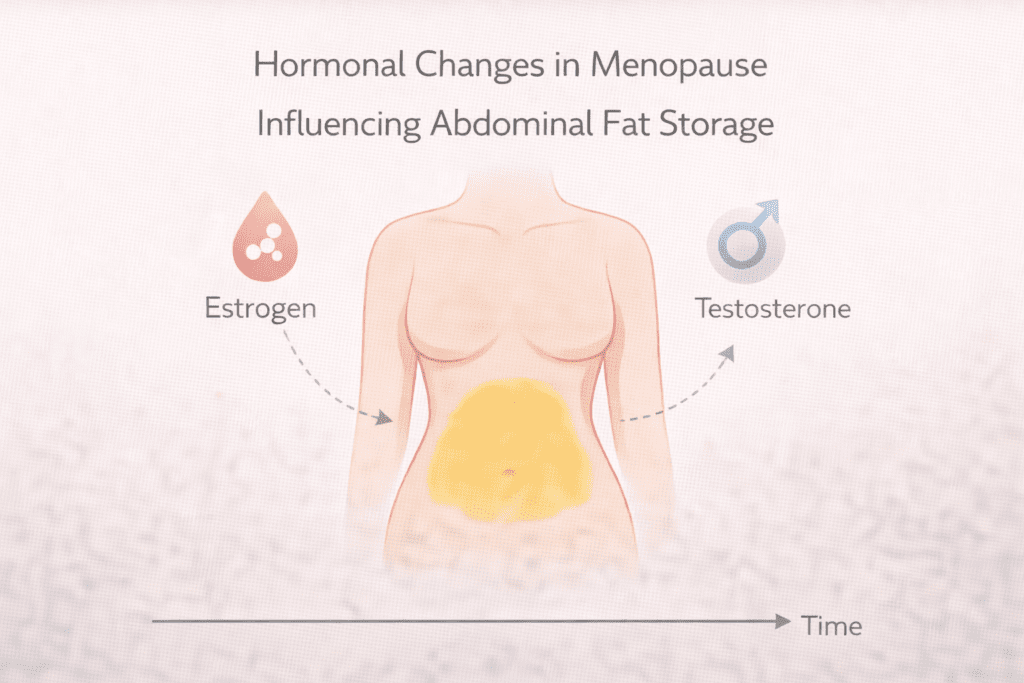
Menopause brings natural hormonal changes, especially shifts in estrogen. These changes influence where the body stores fat, often moving it toward the abdomen. This doesn’t mean something is wrong. It reflects how the body adapts during the menopause transition.
Metabolism and muscle mass also change with age. Loss of muscle mass can lower daily energy use, making weight gain easier even with similar eating habits. At the same time, menopausal women often experience disrupted sleep and higher stress, which can affect appetite and fat storage.
Stress hormones play a role as well. Chronic stress can encourage visceral fat accumulation, which sits deeper around the organs. This type of fat behaves differently than surface body fat and responds more slowly to quick fixes.
Together, these changes explain why menopause belly fat becomes more noticeable. The midsection becomes more sensitive, not because of a single food, but because of how the body processes nutrients during menopause.
The Biological Reasons Certain Foods Affect Menopause Belly Fat
During menopause, the body becomes more sensitive to how foods are processed. This doesn’t mean foods suddenly become “bad,” but certain choices can have a stronger effect on fat storage, bloating, and weight gain than they did before.
Blood Sugar Instability and Insulin Response
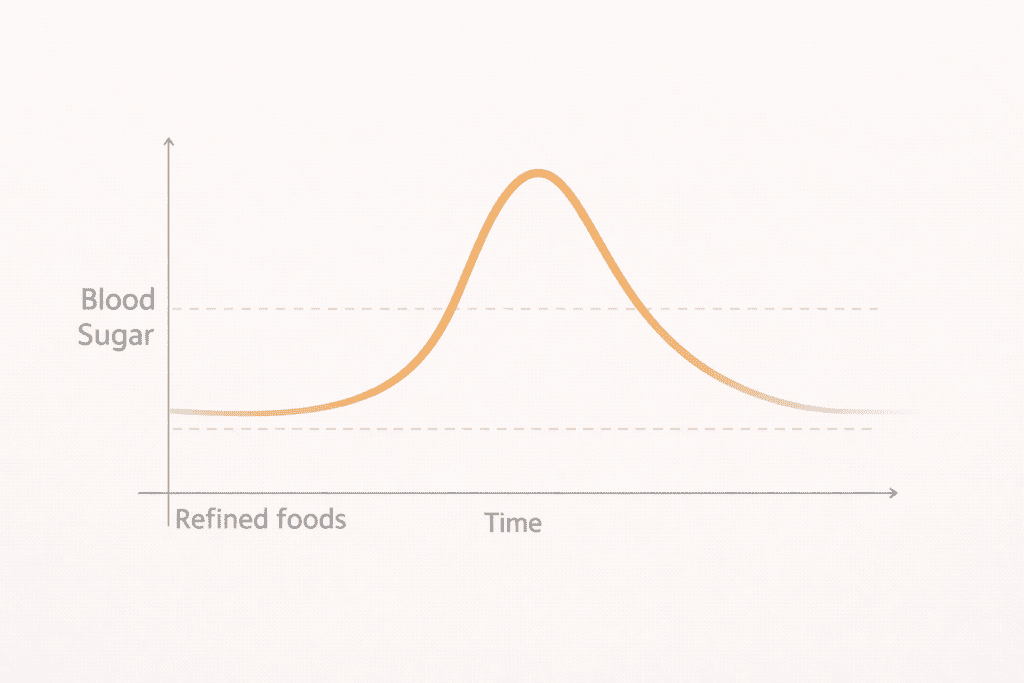
Hormonal shifts during menopause can make blood sugar levels less stable. When foods high in sugar or refined carbohydrates are eaten, blood sugar can rise quickly and fall just as fast. This pattern places extra demand on insulin.
Over time, repeated spikes may contribute to weight gain and make it harder to manage weight. Foods that cause rapid blood sugar changes are often linked to increased body fat storage, especially around the midsection. This response is more noticeable for women going through menopause because insulin sensitivity may decline with age.
Inflammation and Fluid Retention
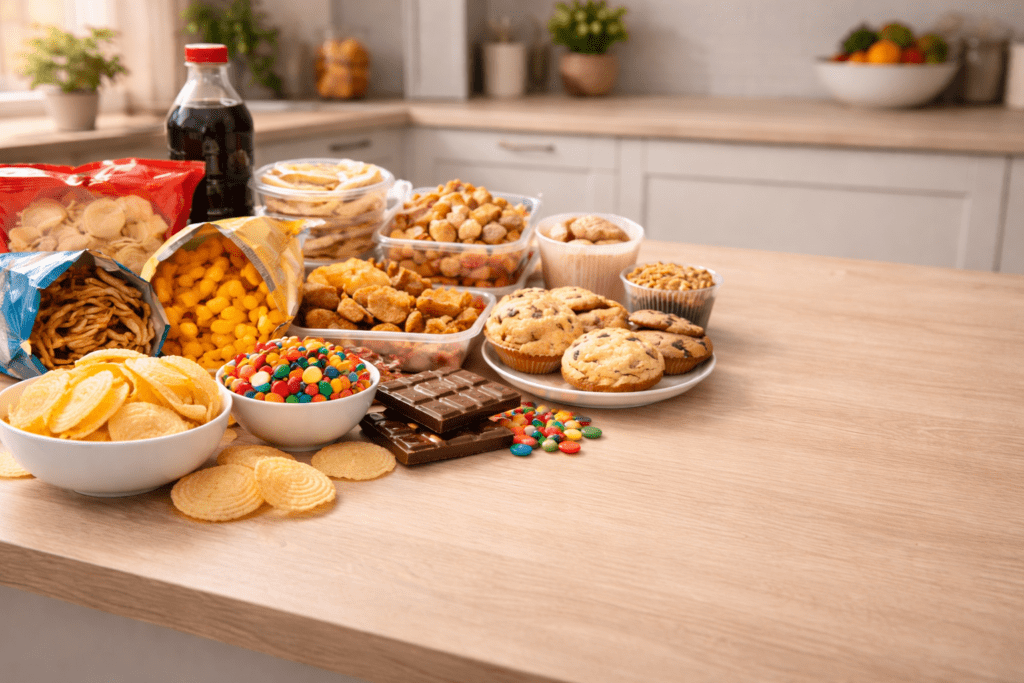
Certain foods can increase inflammation or encourage the body to hold onto fluid. During menopause, inflammation may feel more noticeable due to hormonal sensitivity.
Processed foods and foods high in saturated fat are common contributors. These foods don’t just affect fat storage. They can also increase bloating, which makes belly fat appear more prominent even when actual fat mass hasn’t changed significantly.
Reducing these foods often helps ease discomfort before any visible fat loss occurs.
Digestive Efficiency Changes With Age
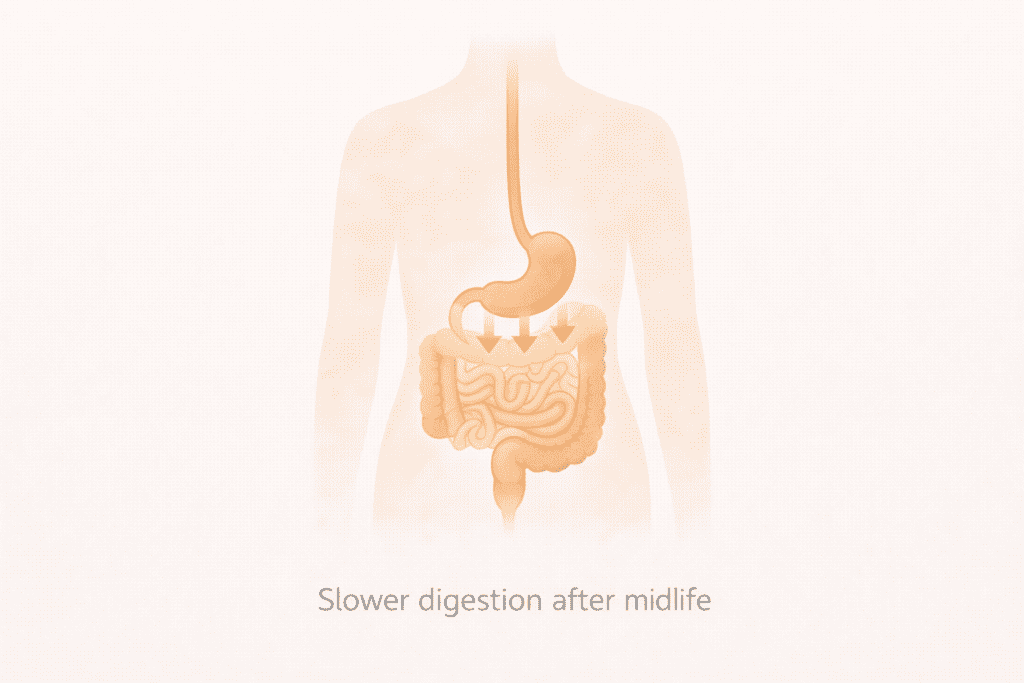
Digestion changes over time. During menopause, digestive efficiency may slow slightly, which affects how nutrients are absorbed and how waste is processed.
Highly processed foods tend to be lower in nutrient quality and harder for the body to manage. When digestion struggles, the body may store extra fat rather than use energy efficiently. This can contribute to gradual weight gain even without large changes in calorie intake.
Foods that are closer to their natural form are generally easier for the body to handle during this stage.
Hormonal Sensitivity to Highly Processed Foods
Menopausal and postmenopausal women often notice stronger reactions to ultra-processed foods. These foods can disrupt appetite cues and encourage overeating without providing lasting fullness.
Hormonal sensitivity during menopause means the body may react more strongly to additives, excess sodium, and refined ingredients. Over time, this can contribute to weight gain and increased visceral fat, which is linked to higher risk of heart disease and type 2 diabetes.
Understanding this biological shift helps explain why identifying foods to avoid during menopause can feel more important than it did earlier in life.
6 Foods To Avoid for Menopause Belly Fat
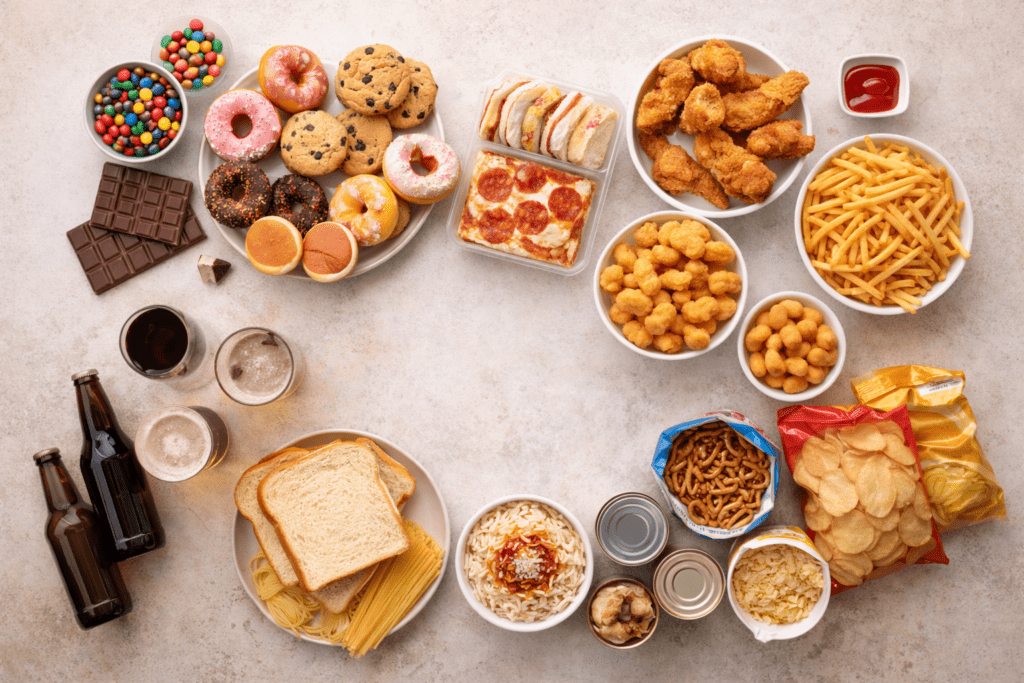
This section is educational and non restrictive. The goal is awareness, not perfection. During menopause, certain foods tend to have a stronger effect on bloating, appetite, and fat storage, especially around the midsection.
Refined Sugars and Sweetened Foods
Foods high in sugar can be harder to manage during menopause. Rapid spikes in blood sugar levels increase insulin demand, which may contribute to weight gain over time.
Sweetened snacks and desserts often add calories without supporting fullness. For women of menopausal age, these foods can make belly fat more noticeable and disrupt energy balance across the day.
Ultra Processed Snack Products
Ultra-processed foods are designed for convenience and taste, not nutrient density. They are often high in refined ingredients, additives, and excess fat.
During menopause, these foods may contribute to weight gain because they are easy to overeat and slow appetite awareness. Over time, relying on ultra-processed foods can increase total body fat and make managing menopausal symptoms more difficult.
Refined Carbohydrates With Low Fiber Content
Refined carbohydrates lack the fiber found in whole grains. Without fiber, digestion happens quickly, which can lead to short lived energy and increased hunger.
For women going through menopause, these foods may contribute to weight gain and make it harder to maintain a healthy weight. Choosing fiber rich options instead supports steadier digestion and appetite control.
Excessive Alcohol Intake
Alcohol affects how the body processes fat and manages blood sugar. During menopause, tolerance often decreases, even if drinking habits stay the same.
Excessive intake can contribute to weight gain and increase visceral fat around the abdomen. Alcohol also interferes with sleep, which further affects health during menopause and overall weight management.
Fried Foods and Processed Fats
Fried foods are typically high in saturated fat and calories. These foods can increase inflammation and slow digestion, especially during the menopause transition.
Regular intake of fried foods may contribute to weight gain and increase the risk of heart disease over time. Reducing these foods often helps ease bloating before any visible fat loss occurs.
High Sodium Packaged Foods
High sodium packaged foods encourage fluid retention. During menopause, this can make the midsection feel tighter and more uncomfortable, even without changes in body fat.
Reducing high sodium foods can improve comfort and help distinguish between bloating and true fat changes. This small adjustment often supports better overall health during menopause.
Lifestyle Factors That Increase the Impact of These Foods
Food choices don’t act alone. During menopause, lifestyle patterns can amplify how certain foods affect belly fat, digestion, and weight gain.
Reduced Daily Movement and Activity Levels
Daily movement often drops without being noticed. Less walking, more sitting, and fewer strength based activities can lower energy use across the day.
When movement decreases, foods that are higher in sugar or fat tend to have a stronger impact. This makes weight gain easier, even when portion sizes haven’t changed much.
Poor Sleep Quality During Menopause
Sleep disruption is common during menopause. Hot flashes, night sweats, and stress can all interfere with rest.
Poor sleep affects appetite regulation and blood sugar control. When sleep is inconsistent, the body is more likely to store fat and respond poorly to foods that are harder to digest.
Chronic Stress and Cortisol Effects
Stress levels often rise during midlife due to work, family, and health changes. Chronic stress can influence where fat is stored, often pushing it toward the abdomen.
In these conditions, foods high in sugar or processed fats may contribute more strongly to belly fat. Managing stress helps reduce this amplified response.
Irregular Meal Timing
Skipping meals or eating at unpredictable times can disrupt digestion and appetite awareness. During menopause, this pattern may lead to overeating later in the day.
Regular meal timing supports steadier energy and helps reduce the impact of foods that are harder on digestion.
Two women can eat similar meals, but the one sleeping poorly and under constant stress often notices more belly discomfort and weight changes.
How Avoiding Certain Foods Supports Weight and Metabolism

Avoiding or limiting specific foods isn’t about strict rules. It’s about reducing strain on the body during a sensitive phase.
Small changes often reduce bloating first. Many women notice less abdominal discomfort before any visible fat loss occurs. Improved digestion can make energy feel steadier and appetite easier to read.
Over time, these adjustments support gradual fat loss and help maintain a healthy weight. Consistency matters more than perfection. Occasional flexibility does not undo progress.
Practical Ways to Adjust Food Choices Gently
Gentle changes work better than extremes during menopause. Building meals around whole, minimally processed foods supports digestion and nutrient intake without feeling restrictive.
Balanced plates that include lean proteins, whole grains, and healthy fats help manage weight and support overall health. This approach is often easier to maintain long term.
Some people also include gentle daily wellness support like Ikaria Lean Belly Juice as part of a broader lifestyle approach focused on digestion and metabolic balance. It’s typically viewed as optional support alongside habits, not a replacement for food awareness or routines.
Common Myths About Foods and Menopause Belly Fat
One myth is that menopause belly fat cannot be influenced. While changes are natural, habits still matter.
Another belief is that cutting entire food groups is required. Extreme dieting often backfires and increases stress.
Some people think one food causes all midsection weight gain. In reality, patterns matter more than single items.
There’s also the idea that extreme dieting works better during menopause. For many women, this leads to more frustration, not better results.
What to Expect When You Change Eating Habits During Menopause
Progress is usually gradual. Reduced bloating often appears before visible fat loss, which can feel encouraging.
Fluctuations are normal during hormonal transitions. Some weeks feel easier than others.
Over time, steady habits support better balance, improved comfort, and more predictable weight management. Some women also explore informational resources that discuss tools like Ikaria Lean Belly Juice for education, but lifestyle consistency remains the foundation.
FAQs About Foods to Avoid for Menopause Belly Fat
What foods to avoid for menopause belly fat the most?
Foods high in sugar, refined carbohydrates, and ultra-processed ingredients tend to have the strongest impact.
Do sugary foods worsen menopause belly fat?
They can contribute by disrupting blood sugar balance and appetite regulation.
Can processed foods increase belly fat during menopause?
Yes. Processed foods are often easy to overeat and low in nutrient value.
How does alcohol affect menopause belly fat?
Alcohol can increase fat storage and disrupt sleep, which affects weight.
Does sodium contribute to bloating during menopause?
High sodium intake often increases fluid retention and abdominal discomfort.
Are carbohydrates bad for menopause belly fat?
Not all carbohydrates. Fiber rich options like whole grains are generally better tolerated.
How long does it take to notice changes after adjusting foods?
Bloating may improve within weeks, while fat loss takes longer.
Can lifestyle habits outweigh foods to avoid for menopause belly fat?
Yes. Sleep, stress, and movement strongly influence results.
Does stress influence how foods affect belly fat?
Chronic stress can increase sensitivity to certain foods.
Is menopause belly fat permanent?
No. While changes are natural, steady habits can improve comfort and balance.
What specific high-sodium foods should I avoid to reduce menopause belly fat?
Highly processed ready meals, canned soups, snack chips, cured meats and many restaurant dishes are high-sodium foods that can increase bloating and water retention and make visceral fat more noticeable. Cutting back on processed foods and choosing low‑sodium or fresh options helps manage weight gain and reduces bothersome menopause symptoms such as bloating.
How do saturated fat and processed foods lead to weight gain in menopause?
Saturated fatfound in fatty cuts of red meat, butter, full‑fat dairy and some baked goodscan contribute to increased visceral fat mass when consumed in excess, especially as metabolic changes during menopause reduce calorie needs. Processed foods and sugar add excess calories and often lack fiber, so reducing processed foods like packaged snacks and sugary pastries helps avoid weight gain and supports a dietary pattern rich in vegetables and unprocessed foods.
Are there particular foods and beverages I should avoid during menopause to prevent belly fat?
Alcohol, sugar-sweetened drinks, fruit juices, and sugary coffee beverages can spike blood sugar and add empty calories that lead to weight gain. Salty beverages, high‑calorie lattes and sugary sodas are foods and beverages to limit; replacing them with water, herbal tea or unsweetened drinks supports a balanced diet and helps avoid overeating.
Does cutting carbs help with menopause belly fat, and which carbohydrate foods should I avoid?
Refined carbs and white flour productswhite bread, pastries, many packaged snacks and some pastacan contribute to fat gain because they are quickly digested and can increase appetite. Instead, focus on a diet rich in vegetables, whole grains and nutrient-dense foods that help manage weight gain during menopause and stabilize blood sugar.
Can certain dairy or soy foods make belly fat worse during perimenopause and menopause?
Full‑fat dairy and sweetened dairy products add saturated fat and calories that may promote gain weight if eaten in excess. Unsweetened low‑fat dairy or fermented options like plain yogurt can be part of a healthy diet. Some people choose soy as a plant‑based protein; minimally processed soy foods are fine for most, but avoid heavily sweetened soy desserts and processed meat substitutes if they are high in sodium or saturated fat.
How can adopting a Mediterranean diet help me avoid menopause belly fat, and what foods to eat instead?
A Mediterranean dietrich in vegetables, fruits, whole grains, legumes, lean proteins, olive oil and omega-3 fatty acids from fishsupports a healthy diet and can help prevent visceral fat accumulation. Emphasize foods to eat such as leafy greens, berries, nuts, fatty fish, and unprocessed foods while avoiding processed foods and sugar to manage weight and lessen bothersome menopause symptoms.
What role do omega-3 fatty acids and nutrient-dense foods play in managing menopausal weight gain?
Omega-3 fatty acids from fatty fish, flaxseed and walnuts have anti-inflammatory effects and may help improve body composition. A diet rich in nutrient-dense foodsvegetables, fruits, lean protein and whole grainssupports metabolic health and can reduce the risk that certain foods may promote visceral fat. Prioritizing these foods helps avoid weight gain and supports overall menopausal health.
When should I consult a menopause centre or healthcare provider about diet during menopause?
If you are experiencing rapid weight gain, severe changes during menopause, or bothersome menopause symptoms despite dietary changes, contact a menopause centre or your healthcare provider. They can assess whether underlying conditions, medication effects or hormonal changes are contributing and provide a personalized plan to manage weight, suggest a balanced diet rich in fruits and vegetables, and recommend ways to avoid overeating and cut back on processed foods.
One Last Thought
Menopause brings real changes, but understanding foods to avoid for menopause belly fat helps make those changes easier to manage. Small, consistent adjustments paired with supportive habits often lead to steadier progress and better long term balance.