

For many adults, evenings are the only quiet part of the day. Work runs long, stress builds up, and dinner gets pushed later than planned. Before you know it, snacks happen close to bedtime-and questions follow.
Is late-night eating and weight gain really connected, or is it just about total calorie intake?
After 30, weight gain often feels harder to manage. People eat similar foods, but results change. Energy drops. Sleep feels lighter. And progress slows, even without major diet changes. This leads many to wonder whether the time of day they eat matters more than they thought.
The confusion is understandable. Some say a calorie is a calorie. Others warn that eating late automatically leads to fat gain. The truth sits somewhere in the middle-and it’s tied closely to sleep, hormones, and how the body processes food at night.
Understanding this isn’t about strict rules. It’s about patterns, recovery, and how the body responds later in the day.
The Biological and Lifestyle Reasons Late-Night Eating Matters After 30
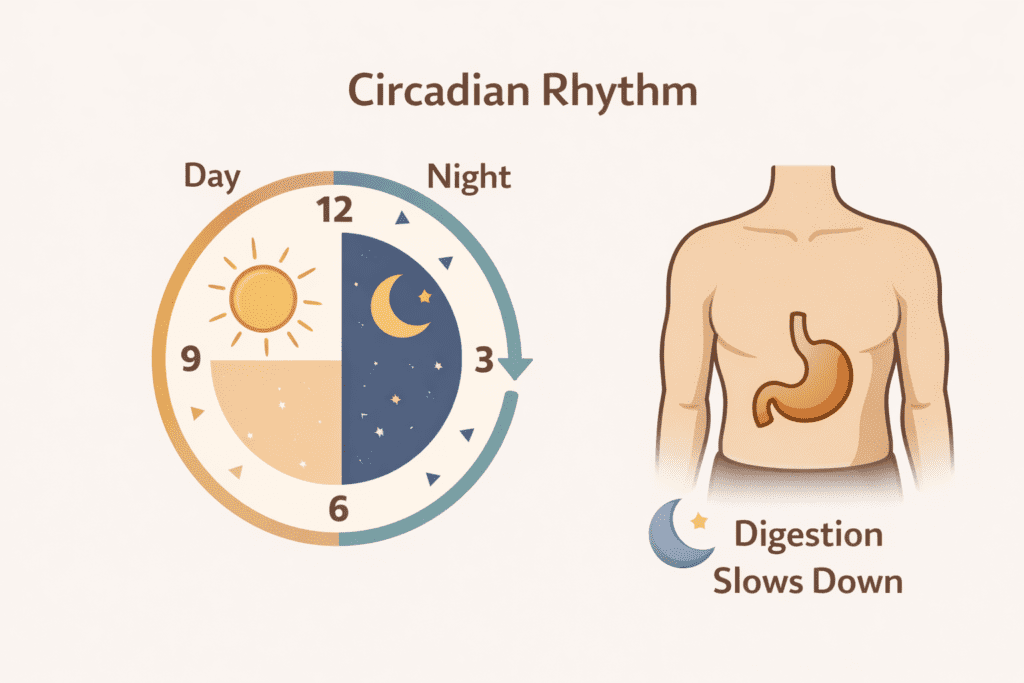
The body follows internal timing systems known as circadian rhythms. These rhythms influence digestion, hormone release, and energy use across the day. At night, the body shifts toward rest and repair-not heavy digestion.
As evening approaches, digestion slows. Insulin response becomes less efficient. This means the same meal eaten at night can lead to higher blood sugar compared to eating it earlier. Over time, repeated spikes may lead to weight gain, especially when sleep quality suffers.
Lifestyle factors add to this. Stress, long screen time, and irregular schedules all increase nighttime hunger. Eating close to bedtime can also interfere with sleep, which further disrupts metabolism and recovery.
After 30, these effects become more noticeable. Sleep becomes lighter, recovery takes longer, and the body’s metabolic flexibility drops. This doesn’t mean late meals are forbidden-but it does mean timing plays a role in how food is handled.
The issue isn’t one late dinner. It’s the pattern of eating late, sleeping poorly, and repeating the cycle.
How Late-Night Eating Can Influence Weight and Metabolism
One of the biggest debates around food timing is whether calories matter more than the clock. The short answer is this: both matter, but in different ways.
Total calorie intake still plays a major role in weight control. Eating more calories than the body needs can cause weight gain over time. However, when those calories are consumed later in the day, the body often handles them less efficiently.
At night, the body’s metabolic activity slows. Digestion takes longer, insulin response is weaker, and the body is more likely to store energy instead of using it. This doesn’t mean eating late at night automatically leads to fat gain, but repeated late meals could lead to changes in how energy is stored.
Blood sugar is another factor. Eating high-calorie foods late can cause larger glucose swings. When blood sugar rises sharply at night, insulin works harder, which may increase fat storage over time. This pattern is linked to higher risk for diabetes and obesity, especially when sleep is disrupted.
Sleep itself plays a big role here. Eating too close to bedtime can interfere with rest. Poor sleep reduces recovery and lowers next-day energy. That often leads to less physical activity, which further reduces energy expenditure.
Here’s the key distinction:
An occasional late meal won’t derail progress. What matters is consistency. Regular eating later in the day, combined with poor sleep and stress, is what tends to lead to weight gain over time.
This is why timing becomes more important after 30. The body is less forgiving, and small habits add up faster than they used to.
Stress, Cortisol, and Nighttime Hunger

Nighttime hunger isn’t always about food. Very often, it’s about stress.
After long workdays, cortisol levels tend to stay elevated. Cortisol affects appetite and can increase cravings, especially for high-fat or sugary foods. This is why many people eat front of the tv at night, even when they weren’t hungry earlier.
When stress stays high, cortisol also encourages fat storage. Over time, this pattern can cause weight gain, particularly around the abdomen where fat tissue is more sensitive to stress hormones. This is one reason people who eat late due to stress often notice gradual changes in body shape.
Stress-driven eating also disrupts blood sugar levels. Late-night snacking can push glucose higher, requiring more insulin to bring it down. Repeating this cycle increases the risk of insulin resistance, which is closely linked to weight gain and type 2 diabetes.
Some people look into supportive options like Nagano Tonic when learning about stress and cortisol balance. It’s usually mentioned in a neutral, informational way, not as a solution. Readers often explore a detailed review to understand how it fits into a broader lifestyle approach.
Reducing evening stress-through simple habits like deep breathing, limiting screens, or earlier wind-down routines-can lower nighttime hunger without strict food rules.
Cellular Energy, Digestion, and Nighttime Metabolism
The body uses energy differently at night.
During the evening, digestion slows and cellular energy demand drops. Mitochondria shift toward repair rather than fuel burning. This means food eaten late is more likely to be stored than immediately used.
This shift affects metabolism, especially when meals are large or eaten very close to sleep. The body needs time to digest, but nighttime is meant for rest. When digestion competes with sleep, recovery suffers.
Some people explore Mitolyn in conversations about cellular energy and mitochondrial support. It’s usually discussed as complementary, not essential. Reviewing details helps readers decide if it aligns with their needs.
The key issue isn’t eating at night once in a while. It’s making heavy meals a regular nighttime habit. Over time, this can affect metabolic health and energy levels the next day.
Blood Sugar Control and Late-Night Eating
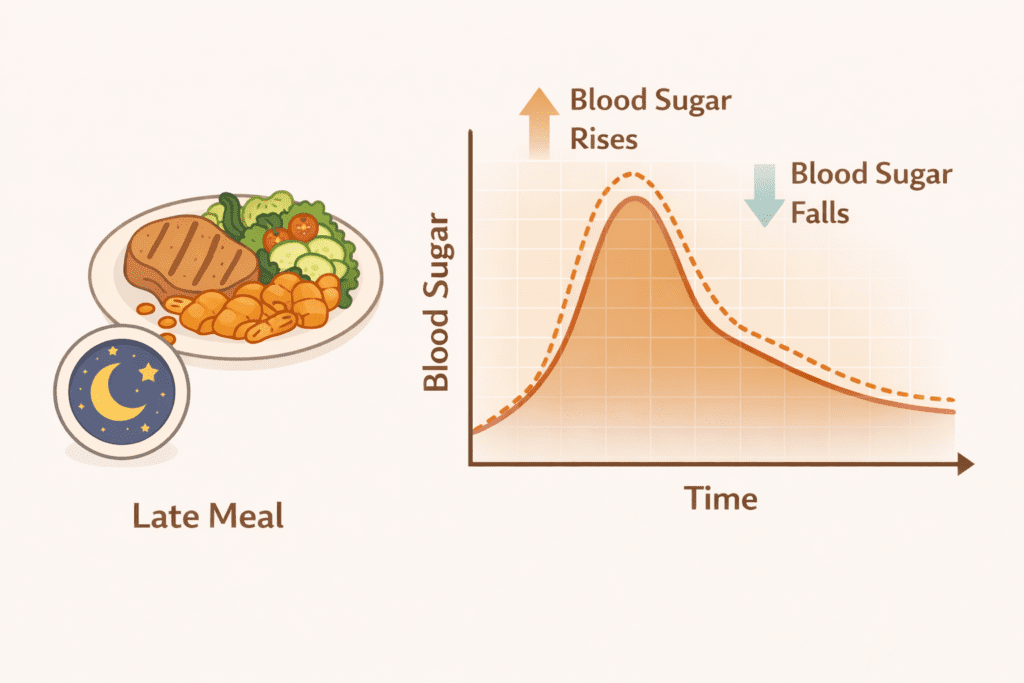
Late meals often affect glucose more than daytime meals.
At night, the body is less able to regulate blood sugar efficiently. Eating larger meals or refined carbs can cause sharper spikes, followed by drops that disturb sleep and increase next-day cravings.
Repeated nighttime glucose spikes increase the risk of diabetes and contribute to gradual weight gain. This pattern is especially common in people with irregular schedules or high stress.
Some people discuss Ikaria Lean Belly Juice in relation to blood sugar and insulin balance. It’s usually referenced as part of a supportive routine, not a replacement for diet or sleep improvements. Many prefer reading a full review before making decisions.
Stabilizing blood sugar at night-by spacing meals earlier or choosing lighter options-can support better sleep and steadier energy.
Morning Thermogenesis After Late-Night Meals
Late meals don’t just affect the night-they often show up the next morning.
When someone eats close to bedtime, sleep quality usually drops. Poor rest reduces morning energy and lowers thermogenesis, which is the body’s ability to generate heat and burn energy after waking. This means energy expenditure tends to be lower the next day.
After nights like this, people often feel sluggish during the daytime. Movement feels harder, workouts get skipped, and overall activity drops. Over time, this pattern affects weight management, even if total calories haven’t changed much.
Some people mention Java Burn when discussing morning thermogenesis and energy support. It’s usually referenced as part of a routine rather than a fix. Anyone curious typically reviews details to understand how it fits into daily habits.
The key issue isn’t one late dinner. It’s the repeated cycle of late eating, poor sleep, and low morning energy that adds up.
Protein Intake, Satiety, and Late-Night Snacking
Not all late-night eating looks the same.
Snacking late often involves high-calorie foods that are low in protein. These foods digest quickly and don’t provide much satiety. As a result, hunger can return even after eating, increasing total calories consumed.
Protein works differently. It helps control hunger and cravings and supports muscle tissue overnight. When protein intake is balanced during the day, nighttime snacking tends to decrease naturally.
Some structured approaches, like The Smoothie Diet, are often mentioned in the context of protein intake and routine. They’re usually discussed as a way to bring structure to eating patterns, not as a requirement. Reviews help people decide if that structure fits their lifestyle.
The goal isn’t to eat nothing at night. It’s to avoid mindless snacking that adds calories without real satisfaction.
Sleep Quality, Hormones, and Night Eating

Sleep and food timing are tightly connected.
Eating too close to sleep can disrupt digestion and raise body temperature, which interferes with falling asleep. This often leads to poor sleep quality, lighter rest, and more wake-ups during the night.
Hormones like ghrelin and leptin, which regulate hunger and fullness, are affected by poor sleep. When sleep is disrupted, ghrelin increases and leptin drops. The result is increased hunger the next day, especially for calorie-dense foods.
Some people look into SleepLean when focusing on sleep quality and hormonal recovery. It’s usually discussed as supportive, not corrective. Most readers explore details before deciding whether it fits their routine.
Improving sleep timing and food timing together helps break the cycle of night eating and next-day fatigue.
Frequently Asked Questions About Late-Night Eating
Does eating late at night automatically cause weight gain?
No. One late meal won’t automatically cause fat gain. Patterns matter more than single events, especially when sleep and stress are involved.
Is late-night eating worse after age 30?
It can be. After 30, digestion slows and sleep becomes lighter, so the body may handle food less efficiently at night.
Are calories at night stored as fat more easily?
At night, the body tends to store energy more than burn it. This doesn’t mean every calorie turns into fat, but timing can influence storage.
Can late meals slow metabolism?
Repeated late meals paired with poor sleep can affect metabolic activity and recovery, which may slow progress over time.
What time should you stop eating for weight loss?
There’s no universal cutoff. Many people feel better leaving three to four hours between their last meal and sleep.
Does protein at night affect weight differently?
Protein tends to be more filling and may support muscle overnight, especially compared to sugary or high-fat snacks.
How does late eating impact sleep quality?
Eating too close to sleep can interfere with digestion and raise body temperature, making it harder to rest deeply.
Is occasional late-night eating harmful?
No. Occasional late meals are part of real life. Problems arise when it becomes a regular habit.
Can stress cause nighttime hunger?
Yes. Stress increases cravings and appetite in the evening, even without true hunger.
What’s more important: meal timing or total calories?
Both matter. Calories drive weight change, but timing affects sleep, recovery, and how those calories are used.
Final Verdict: What Late-Night Eating Really Means for Your Health

Late meals aren’t the enemy. Patterns are.
When eating late becomes routine-paired with stress, screen time, and poor sleep-it can affect metabolism, blood sugar control, and recovery. Over time, this combination makes weight gain more likely and weight control harder.
On the other hand, balanced eating earlier in the day, better sleep habits, and stress management help the body respond more normally to food. This supports maintain a healthy weight without rigid rules.
The goal isn’t perfection. It’s awareness.
One Last Thought
Weight management isn’t about strict schedules or fear around food.
Listening to your body, noticing patterns, and making small adjustments matter more than cutting meals or counting every calorie. When sleep improves and routines feel realistic, results follow naturally.
Long-term progress comes from steady habits-not from stressing over the clock.