

Most adults focus on what they eat and how active they are during the day. Very few stop to think about what happens at night. But after 30, night habits quietly shape whether weight loss moves forward-or stalls.
Here’s something many people overlook: fat loss doesn’t only depend on daytime effort. What you do in the hours before bedtime affects sleep quality, appetite, hormones, and how the body uses calories the next day.
Many people in the US are trying to lose weight, yet struggle with late nights, inconsistent sleep, or habits that disrupt rest. Over time, those patterns can lead to weight gain even when diet and exercise seem reasonable.
Night habits that support fat loss aren’t about strict rules or perfection. They’re about creating conditions where the body can recover, regulate hunger, and manage energy more efficiently.
Why Night Habits Matter More After 30
As people get older, the body becomes more sensitive to sleep disruption. Sleep deprivation, lack of sleep, and poor sleep quality affect how the body manages weight in several ways.
One major factor is the circadian rhythm. This internal clock helps regulate sleep, appetite, and energy use. When bedtime shifts too late or sleep patterns stay inconsistent, the circadian rhythm can fall out of sync. That can increase appetite, reduce calorie burn, and raise the risk of obesity over time.
Hormones also play a role. Short or broken sleep can increase ghrelin, the hormone that drives hunger, while lowering leptin, the hormone that signals fullness. When these signals are off, cravings increase and portion control becomes harder-especially close to bedtime.
Another issue is sleep duration. Getting fewer hours of sleep per night can reduce physical activity the next day. People feel more tired, move less, and burn fewer calories without realizing it. Over time, this contributes to weight gain and makes weight management more challenging.
Nighttime Behavior and the Weight Loss Struggle

Night habits often create problems without obvious warning signs. Eating close to bedtime, staying up late on screens, or not getting enough sleep may seem harmless in the moment. But these habits can affect blood sugar, appetite, and fat storage overnight.
For example, heavy meals before bed can raise blood sugar and interfere with restful sleep. Late-night snacking often adds extra calorie intake that doesn’t support recovery. Over time, these patterns can lead to weight gain even when daytime food choices look fine.
Sleep deprivation also affects decision-making. When people are sleep deprived, food choices tend to shift toward quick, high-calorie options. This makes healthy food harder to stick with, especially when you’re trying to lose weight.
The connection between sleep and weight becomes stronger after 30 because recovery slows down and stress levels are often higher. Night habits that once had little impact can now play a bigger role in fat storage and overall health.
Why Fat Loss Starts the Night Before
Fat loss doesn’t begin in the gym or the kitchen. It often starts the night before-with sleep habits, bedtime routines, and how well the body recovers.
Better sleep supports hormone balance, appetite control, and energy levels the next day. Enough sleep makes it easier to stay physically active, make better food choices, and manage cravings.
This doesn’t mean every night has to be perfect. In most cases, consistency matters more than occasional late nights. Simple changes-like a regular bedtime, fewer late meals, and better sleep hygiene-can support weight loss without extreme effort.
In the next sections, we’ll look at specific biological systems influenced by night habits, including stress hormones, cellular energy, blood sugar balance, thermogenesis, muscle preservation, and sleep recovery.
Stress Signals at Night and Why Cortisol Can Block Fat Loss

Evenings are when the body is supposed to slow down. But for many adults over 30, nights are packed with stress. Work messages, late meals, scrolling, and unfinished tasks keep the nervous system switched on.
When that happens, cortisol stays elevated into the night.
Cortisol is a stress hormone, and in short bursts it’s helpful. But when it remains high at night, it can interfere with sleep quality and push the body toward energy storage. Over time, this pattern may support weight gain rather than weight loss, even when someone is trying to lose weight.
Here’s what I noticed while researching this: people with stressful nights often wake up tired, crave quick energy foods, and feel hungrier the next day. That cycle makes weight management harder, not because of lack of effort, but because the body never fully settles down.
This is where calming, stress-support approaches are sometimes discussed. Nagano Tonic often comes up in conversations around supporting a more balanced stress response, especially when evenings feel wired instead of relaxed. The focus isn’t forcing relaxation, but helping the body ease out of high-alert mode.
If you want to see how stress-focused support fits into a broader night routine, that’s usually explained in more detail on a dedicated review page.
Cellular Energy Overnight and Why Recovery Matters
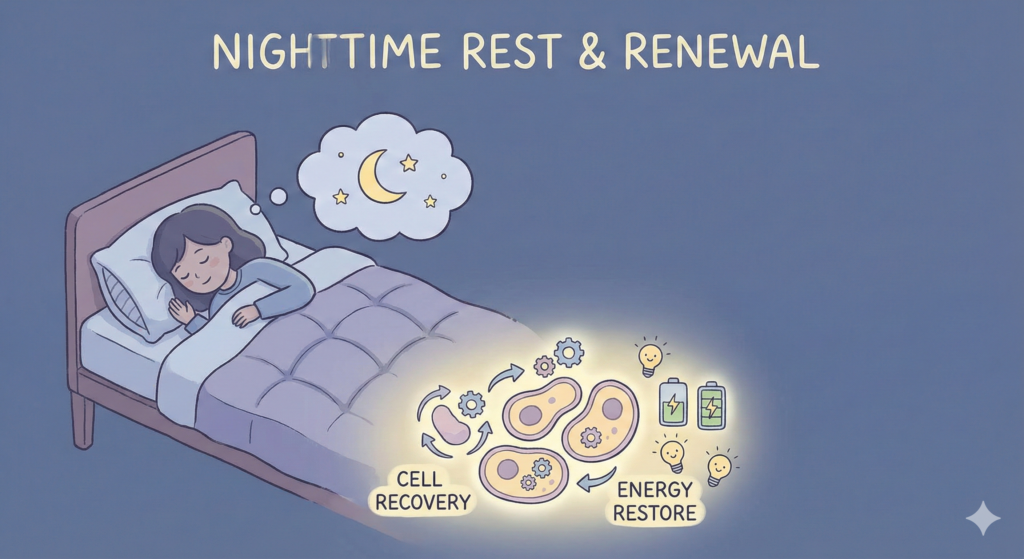
Another reason night habits matter for fat loss has to do with cellular energy. While it might not feel like much is happening during sleep, the body is doing a lot of repair work behind the scenes.
At night, cells restore energy systems that help regulate metabolism and daily movement. When sleep is cut short or disrupted, this recovery process doesn’t fully happen. The next day, energy levels drop, physical activity often decreases, and fewer calories are burned overall.
This doesn’t mean one bad night ruins progress. But repeated poor nights can create a pattern of lower energy and less movement, which quietly affects weight loss over time.
In this context, Mitolyn is sometimes mentioned for its focus on supporting mitochondrial and cellular energy function. The discussion is usually around helping the body recover more effectively so daily energy output doesn’t slowly decline.
From my research, this type of support tends to be explored by people who feel consistently drained despite eating well and trying to stay active. If you’re curious how cellular-energy support fits into a longer-term plan, internal review content usually breaks that down clearly.
Blood Sugar at Night and Why Late Habits Carry Into the Morning
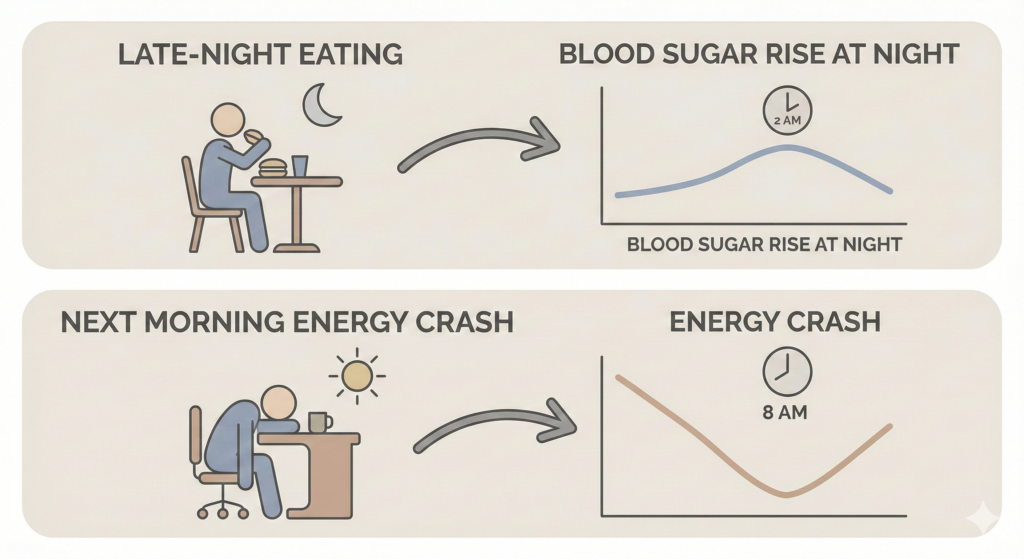
What happens to blood sugar in the evening doesn’t stay in the evening. Late meals, sugary snacks, or eating close to bedtime can raise blood sugar when the body is meant to be winding down. That can interfere with sleep and affect how the body handles food the next day.
Here’s the part many people miss. When blood sugar stays elevated at night, insulin remains active longer. This can increase appetite the following morning and make it harder to regulate portions during the day. Over time, that pattern can support weight gain instead of weight loss, even when calorie intake doesn’t seem excessive.
Sleep deprivation makes this worse. Short or broken sleep can reduce insulin sensitivity, which means the body needs more insulin to manage the same foods. That often leads to stronger cravings and less stable energy, especially for people trying to lose weight.
This is why steady evening routines matter. In discussions around blood sugar balance, Ikaria Lean Belly Juice is sometimes mentioned for its focus on supporting smoother blood sugar responses rather than sharp spikes. The idea is consistency, not restriction.
If you want to explore how blood sugar–focused approaches fit into a full night routine, that’s usually explained more clearly on a dedicated review page.
Morning Thermogenesis Starts the Night Before
It might sound odd, but how well the body burns calories in the morning is influenced by the night before. One reason is thermogenesis-the process that helps the body produce heat and use energy.
Poor sleep, late nights, and irregular bedtimes can reduce thermogenesis the next day. People often feel colder, slower, and less motivated to move. Steps drop. Daily movement decreases. Over time, this lowers how many calories are burned without people noticing.
This is one reason night habits that support fat loss matter so much. Better sleep supports better energy use the next day. It becomes easier to stay physically active and maintain momentum.
In this context, Java Burn is often discussed around morning routines and thermogenesis. The focus is usually on supporting the body’s natural energy-use process, not overstimulation or quick fixes.
From what I’ve seen, thermogenesis improves most when sleep habits are consistent and evenings are calmer. More detailed explanations are typically available through internal review content.
Protein Intake at Night and Protecting Muscle While You Lose Fat
Evening eating habits don’t just affect sleep. They also influence muscle preservation, which matters more after 30. When protein intake is too low-especially during periods of weight loss-the body may break down muscle overnight for energy. That makes it harder to lose fat and easier to regain weight later.
Here’s the tricky part. Many people eat most of their protein earlier in the day, then snack lightly or skip dinner. Others eat a heavy meal before bed that’s high in calories but low in protein. Neither pattern helps muscle recovery.
Supporting muscle at night doesn’t require large meals. In most cases, it means avoiding extremes and making sure protein intake is steady across the day. Preserving muscle helps maintain calorie burn and supports healthier weight management over time.
This is why structured, protein-focused approaches are sometimes discussed. The Smoothie Diet often comes up in conversations about simplifying protein intake, especially for people who struggle with evening meals or consistency. The focus is on meeting basic needs, not restriction.
If you want to see how protein-focused routines fit into a broader night strategy, that’s usually explained more fully in a dedicated review.
Sleep Quality, Hormonal Recovery, and Fat Storage Signals
Of all night habits, sleep quality has the strongest influence on fat loss. Poor sleep doesn’t just make people tired-it disrupts hormones that control hunger, fullness, and fat storage.
When sleep quality is low, ghrelin tends to rise and leptin falls. Appetite increases. Cravings get stronger. At the same time, cortisol stays elevated, which can push the body toward storing fat rather than using it for fuel.
This doesn’t mean one bad night ruins progress. But repeated nights of poor sleep can quietly undermine even the best diet and exercise plans. Over time, weight loss becomes harder, and weight gain becomes easier.
This is why sleep-focused support often comes up in night routine discussions. SleepLean is commonly mentioned around supporting better sleep quality and overnight hormonal recovery. The goal isn’t sedation or guarantees-just helping the body settle into more restful sleep.
From my research, improving sleep often makes other habits easier to maintain. Review pages usually explain how sleep support fits into a full lifestyle approach.
Bringing It All Together: Why Nights Shape Fat Loss
Night habits that support fat loss work quietly, not dramatically. They influence stress levels, cellular recovery, blood sugar balance, energy use, muscle preservation, and sleep quality.
When nights are rushed, inconsistent, or stressful, the body carries that disruption into the next day. Appetite increases. Energy drops. Calorie burn slows. Over time, those small effects add up.
The goal isn’t perfect nights. It’s better nights-most of the time. A calmer bedtime, consistent sleep schedule, lighter evening meals, and fewer late disruptions can support weight loss without extreme effort.
Final Verdict

Night habits matter more for fat loss than most people think, especially after 30.
You don’t need complicated routines or strict rules. What usually helps is consistency: enough sleep, calmer evenings, balanced meals, and habits that support recovery instead of stress.
When night habits improve, fat loss often feels less forced-and more sustainable.
Frequently Asked Questions (FAQs)
Do night habits really affect weight loss?
Yes. Night habits influence sleep quality, appetite hormones, and how many calories you burn the next day.
Is eating late always bad for fat loss?
Not always. But heavy or high-sugar meals close to bedtime can affect sleep and blood sugar, which may slow progress.
How many hours of sleep support fat loss?
Most adults do best with seven to nine hours per night, though individual needs vary.
Can better sleep reduce cravings?
In many cases, yes. Better sleep helps regulate hunger hormones and appetite control.
What’s one night habit to start with?
A consistent bedtime is often the simplest and most effective first step.
One Last Thought
If weight loss feels harder than it should, it’s worth looking at what happens after dinner.
Night habits don’t need to be perfect to be helpful. They just need to support recovery instead of fighting it. When evenings calm down and sleep improves, the body often responds in quiet but meaningful ways.
That’s a good place to start.