

For many adults over 30, weight loss feels harder than it used to. Diet plans are followed. Physical activity is added. Calories are tracked. Yet weight gain still happens-or fat just won’t budge.
Here’s the part most people don’t connect right away: sleep.
Sleep isn’t just about feeling rested. Sleep affects weight loss in ways that are easy to miss, especially when life gets busy. Short nights, poor sleep quality, or inconsistent sleep patterns quietly change how the body handles appetite, energy use, and fat storage.
Most people in the US focus on diet and exercise first. Sleep comes later-if at all. But research and real-world patterns suggest that sleep and weight are closely linked, particularly after 30, when the body becomes less forgiving of bad habits.
This doesn’t mean one bad night causes obesity. But over time, sleep deprivation can stack the odds against you, even when you’re trying to lose weight.
Why Sleep Starts to Matter More After 30
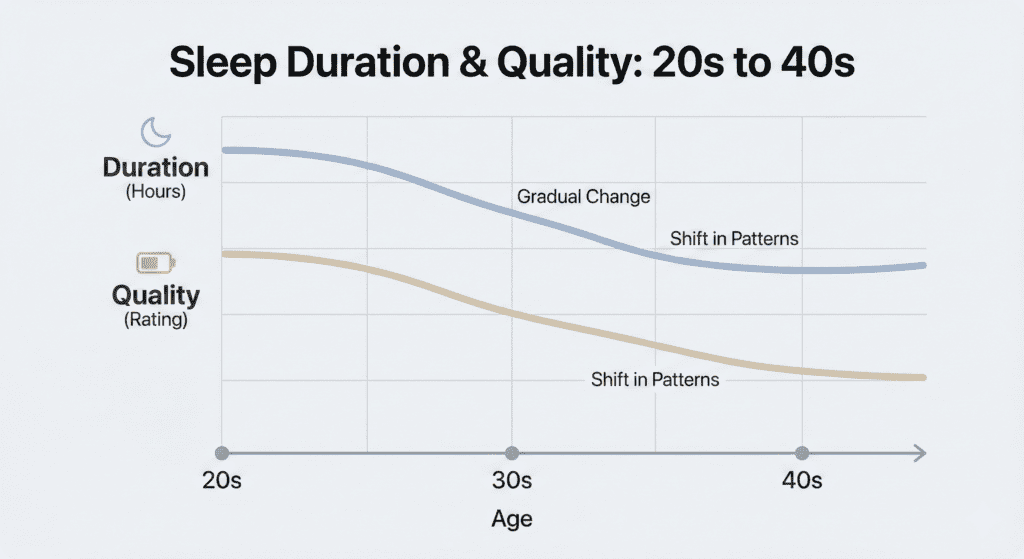
Sleep changes with age. That’s normal. But those changes come with trade-offs.
As adults get older, sleep duration often decreases. Work stress, late-night screen time, family responsibilities, and irregular schedules all contribute. Many people get less than seven hours a night without realizing how often it happens.
Lack of sleep affects the body in several ways:
- It alters hormone balance
- It increases appetite
- It reduces insulin sensitivity
- It lowers daily energy output
When sleep loss becomes a pattern, the body adapts in ways that can lead to weight gain. Fat cells become more efficient at storing energy. Hunger hormones like ghrelin increase, while leptin-responsible for fullness-drops. This makes it harder to regulate food intake the next day.
Sleep deprivation has long been associated with obesity, not because people are lazy, but because sleep alters the way the brain works. Decision-making, impulse control, and motivation all take a hit when someone is sleep-deprived.
Sleep, Metabolism, and Appetite Control
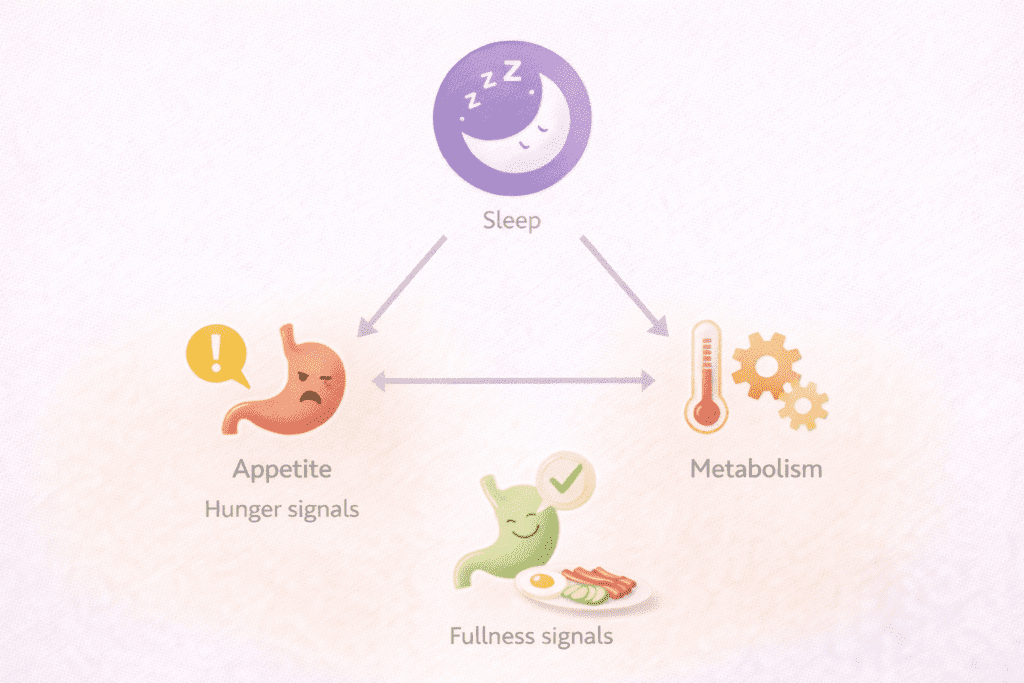
Sleep and metabolism are deeply connected. When sleep duration is short or sleep quality is poor, the body shifts into a conservation mode. Energy expenditure drops. Cravings rise. Physical activity often decreases without people noticing.
In sleep-deprived participants studied over time, researchers observed higher appetite, increased late-night snacking, and a stronger preference for calorie-dense foods. This isn’t a lack of willpower-it’s biology.
Short sleep can also make it harder to make healthy choices the next day. Poor sleep can decrease self-control, which affects eating patterns and portion sizes. Over time, this can contribute to weight gain even if diet and exercise look “okay” on paper.
Sleep restriction doesn’t just affect fat loss. It can also affect where fat is stored. Some evidence suggests poor sleep is associated with higher body fat levels, especially around the abdomen.
This is why sleep is an important part of weight management-not a bonus, but a foundation.
Why Diet and Exercise Alone Sometimes Aren’t Enough
Many adults trying to lose weight focus almost entirely on diet and exercise. That approach makes sense-but it’s incomplete.
When someone doesn’t get enough sleep, the body may make it harder to lose weight, even with regular physical activity. Sleep loss can lower training performance, slow recovery, and reduce motivation for regular physical activity.
Sleep disorders like sleep apnea can make this even more challenging. Interrupted sleep affects oxygen levels, hormone regulation, and metabolic function. Over time, this can lead to weight gain and make weight loss maintenance harder.
Sleep affects weight not in one dramatic way, but through many small changes that add up.
And that’s the key idea going forward.
In the next sections, we’ll look at specific biological systems-stress hormones, cellular energy, blood sugar balance, thermogenesis, muscle preservation, and sleep quality-and how each one connects to weight loss after 30.
Stress, Cortisol, and Why Sleep Debt Makes Fat Loss Harder

One of the first systems disrupted by poor sleep is the body’s stress response. When sleep is short or broken, cortisol levels often stay elevated into the next day. Cortisol isn’t a bad hormone-it helps with alertness-but chronically high levels can interfere with fat loss.
Here’s what I noticed while digging into this topic: adults over 30 who don’t get consistent sleep often wake up already stressed. That stress signal tells the body to conserve energy, not release it. Over time, this can slow progress even when diet and activity stay the same.
High cortisol is also linked to increased appetite and a greater tendency to store fat, especially around the midsection. This is one reason sleep affects weight loss in ways that feel indirect but powerful.
Some people explore gentle stress-support approaches alongside better sleep habits. Nagano Tonic is often mentioned in conversations around helping the body handle stress more smoothly rather than pushing stimulation. The idea is support, not force.
If you want to see how this type of stress-focused support fits into a broader sleep and weight strategy, it’s usually explained in more detail on a dedicated review page.
Cellular Energy, Mitochondria, and Feeling Drained After Poor Sleep
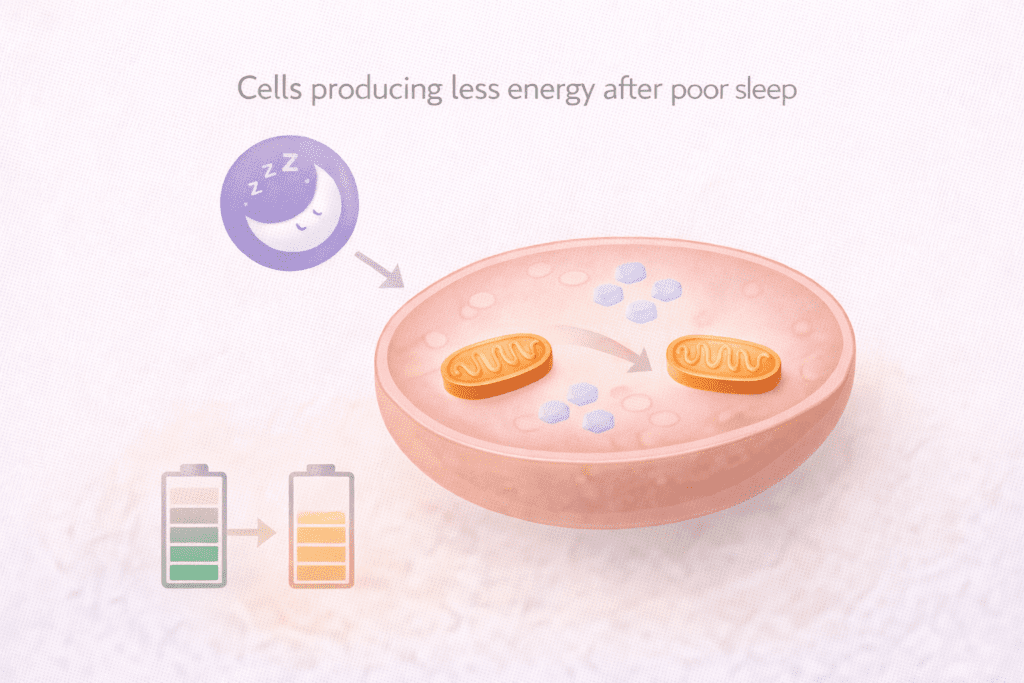
Another overlooked effect of sleep loss shows up at the cellular level. When sleep quality suffers, the body’s ability to produce energy efficiently can decline. This doesn’t just affect how tired you feel-it can influence how many calories you burn throughout the day.
Mitochondria are responsible for turning food into usable energy. Poor sleep may reduce how well these structures function, especially in adults over 30. When cellular energy drops, physical activity often decreases without people realizing it. Daily movement becomes lower, and overall energy output follows.
This helps explain why sleep deprivation can lead to weight gain even when eating habits haven’t changed much. The body simply isn’t using energy as efficiently.
In this context, Mitolyn is sometimes discussed for its focus on cellular energy and mitochondrial support. It’s not about stimulation or quick energy spikes, but about supporting how cells function over time.
From my research, this approach tends to be explored by people who feel consistently drained after poor sleep and struggle to stay active during the day. If you’re curious, internal review content usually breaks down how this type of support is positioned within a long-term routine.
Blood Sugar Swings and Why Poor Sleep Drives Hunger
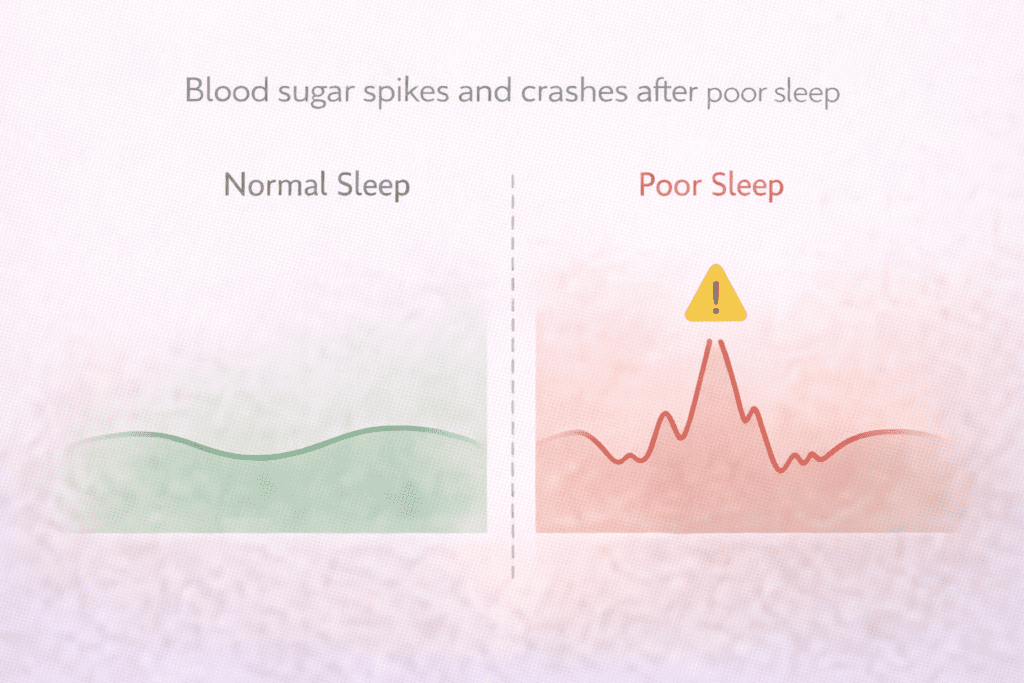
One of the strongest links between sleep and weight gain has to do with blood sugar control. When sleep is cut short or disrupted, the body often becomes less responsive to insulin the next day. This makes it harder to manage blood sugar after meals.
Here’s what tends to happen. After poor sleep, appetite increases, especially for quick energy foods. Blood sugar rises faster, then drops faster. That drop can trigger hunger, low focus, and stronger cravings later in the day. This cycle makes weight management more difficult, even for people who eat reasonably well.
Sleep affects weight partly because it changes how the body handles food, not just how much food is eaten. When insulin sensitivity is reduced, fat storage becomes more likely, especially when meals are skipped or pushed late.
In discussions around blood sugar balance, Ikaria Lean Belly Juice is often mentioned in a neutral context. The focus is usually on supporting steadier blood sugar responses rather than forcing fat loss. This type of support is generally considered alongside consistent meals, sleep patterns, and healthier eating habits.
If you want to understand how blood sugar–focused approaches fit into a broader sleep and weight strategy, that’s usually explained more clearly on a full review page.
Thermogenesis and Why Tired Mornings Burn Fewer Calories
Sleep also influences how much energy the body uses during the day. One process involved here is thermogenesis, which refers to how the body produces heat and burns calories. When sleep is poor, this process can slow down.
After a short night of sleep, many people move less without realizing it. Steps drop. Posture slumps. Motivation fades. Even small reductions in movement lower daily calorie use. Over time, this can contribute to weight gain.
Sleep-deprived adults may also rely heavily on caffeine just to feel functional. But alertness doesn’t always mean higher energy expenditure. Thermogenesis depends more on how the body responds to movement, food, and warmth throughout the day.
This is where Java Burn is often discussed in relation to morning routines. It’s usually mentioned around supporting natural thermogenesis rather than overstimulation. The emphasis is on complementing daily habits, not replacing them.
From what I’ve seen, approaches like this tend to work best when paired with consistent sleep, light morning movement, and regular meals. More detailed explanations are typically available through internal review content.
Protein Intake, Muscle Loss, and Why Sleep Changes the Equation
Sleep doesn’t just affect appetite or energy. It also plays a role in how well the body maintains muscle, especially after 30. When sleep is poor, muscle recovery slows down. Over time, this can lead to gradual muscle loss.
Muscle matters because it helps the body burn more calories at rest. When muscle mass declines, metabolism can slow, even if food intake stays the same. This is one reason people experience weight gain despite trying to eat better.
Protein intake becomes more important in this stage of life. Without enough protein, especially during periods of poor sleep, the body may break down muscle more easily. That makes weight loss harder and long-term progress less stable.
This is why structured, protein-focused approaches are often discussed in sleep and weight conversations. The Smoothie Diet is sometimes mentioned in this context, mainly around helping people meet protein needs more consistently without complicated meal planning.
From my research, protein support works best when paired with quality sleep and regular physical activity. It’s not a shortcut, but it can reduce one more barrier that shows up when sleep hasn’t been ideal.
If you want to see how protein-focused routines are structured in more detail, that’s usually explained inside a full review.
Sleep Quality, Hormones, and Fat Storage Signals
At the center of sleep and weight is hormone balance. Sleep quality influences hormones that control hunger, fullness, stress, and fat storage. When sleep is disrupted, those signals often become misaligned.
Poor sleep can raise ghrelin, lower leptin, and increase cortisol-all of which can push the body toward storing fat rather than using it. This doesn’t happen overnight, but repeated sleep loss can stack the odds against weight loss after 30.
Sleep also affects how well the body recovers overnight. Without enough deep rest, hormonal recovery stays incomplete. That can make mornings harder, appetite stronger, and energy lower throughout the day.
This is where SleepLean is often discussed, specifically in conversations around supporting sleep quality and nighttime recovery. The emphasis is usually on helping the body settle into better rest, not forcing sleep or making promises.
Personally, I think sleep support gets overlooked because it isn’t exciting. But when sleep improves, many people notice that weight-related habits become easier to manage. Review pages usually explain how this type of support fits into a broader lifestyle approach.
Bringing It All Together: Why Sleep Can’t Be an Afterthought
Sleep affects weight loss after 30 in quiet but powerful ways. It influences stress hormones, cellular energy, blood sugar balance, thermogenesis, muscle preservation, and recovery. When sleep is off, these systems don’t work together as smoothly.
This is why diet and exercise alone sometimes aren’t enough. Without consistent, quality sleep, the body may resist fat loss even when effort is there.
The goal isn’t perfect sleep. It’s better sleep, most nights, over time. Small improvements-earlier bedtimes, fewer late nights, calmer evenings-can support weight management in ways that add up slowly but steadily.
Final Verdict

Sleep affects weight loss more than most people realize, especially after 30.
It doesn’t replace diet or physical activity, but it strongly influences how effective those efforts are. Poor sleep can increase hunger, reduce energy use, disrupt hormones, and make consistency harder.
If weight loss has felt frustrating despite doing “the right things,” sleep is worth a closer look. Not as a quick fix, but as a foundation.
Frequently Asked Questions (FAQs)
Does lack of sleep really cause weight gain?
It can contribute. Sleep loss affects appetite, hormones, and daily energy use, which together can lead to gradual weight gain over time.
How many hours of sleep are best for weight loss?
Most adults do best with seven to eight hours a night, though individual needs vary.
Can better sleep improve metabolism?
In many cases, yes. Quality sleep supports hormone balance and energy regulation, which can help metabolism function more efficiently.
Is sleep more important than diet or exercise?
They all work together. Sleep doesn’t replace diet or exercise, but without it, progress can be slower.
What’s one simple way to improve sleep?
Consistent bedtimes and reducing late-night screen use are often good places to start.
One Last Thought
If you’re over 30 and trying to lose weight, it’s easy to push sleep to the bottom of the list. Life gets busy. Nights get shorter. You tell yourself you’ll catch up later.
But sleep isn’t something you make up for all at once. It’s something the body responds to night after night. When sleep improves, even slightly, many other habits feel easier to maintain.
That’s worth paying attention to.